
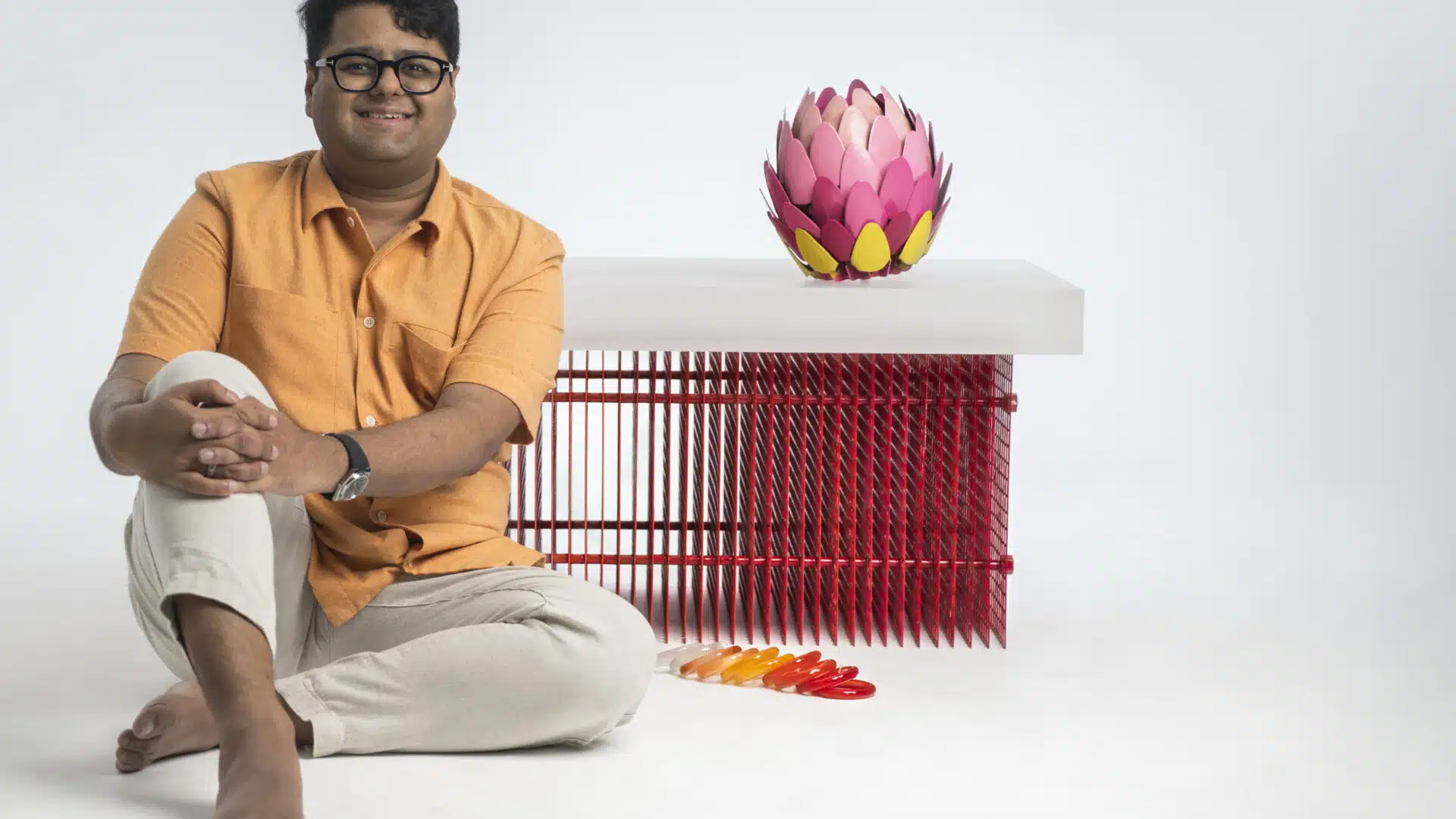
For Dhruv Agarwwal, design begins with memory. His work draws from the textures, colours and objects of his childhood in India—board games, mosaic floors, temple ceilings and domestic rituals—reimagined at unexpected scales. Familiar forms, such as wooden toys, are repeated and reassembled to become inhabitable rather than merely remembered.
Rooted in personal experience and realised through collective making, Agarwwal’s practice moves fluidly between craft techniques, contemporary processes and storytelling. He works closely with artisan communities in places like Channapatna and Moradabad, allowing material knowledge and regional context to shape each piece. The resulting objects—whether furniture, lighting or large-scale installations—carry a sense of play and wonder.
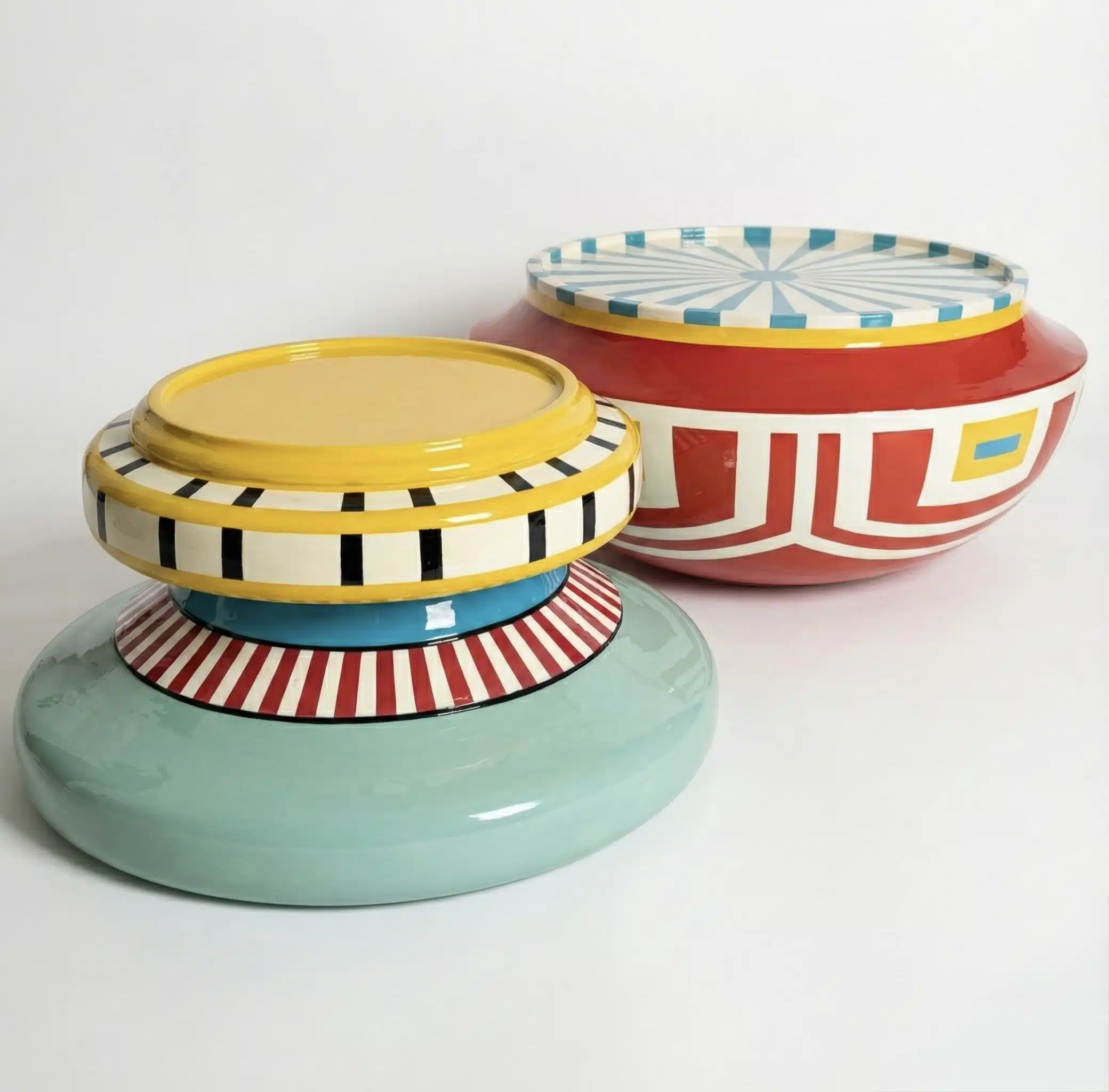
Ahead of his presentation at India Art Fair 2026, presented through Galerie Maria Wettergren, we speak to Dhruv Agarwwal about nostalgia as a driving force behind his design language, the role of scale in his work and what it means to build contemporary relevance without disconnecting craft from its source.
Your practice feels eclectic and unpredictable. How much of your personal experiences shape the way you see the world and translate into objects?
Nostalgia is probably the most important word when I describe my work. Most of my memories are deeply domestic. I grew up in a middle-class household in Civil Lines, Delhi, in a rented flat where my family occupied a small corner of the building. My grandparents were close to the owner of the house. The flat had mosaic-chip floors, textured walls, tiny rooms filled with stories. My parents and grandmother shaped a very happy childhood. I hold onto those memories, they ground me. Those memories are at the centre of everything I make today.
In every piece I am chasing a moment of wonder I felt during childhood. Memories like childhood afternoons spent playing an Indian board game called the chaupad with my grandmother, or the wonder I felt while handling its wonderful wooden pieces, the gotis. My use of colours come from a memory of a visit to the Rameshwaram temple when I was very young—the temple ceilings were filled with mandalas and chakras, so vivid they felt like a candy store in a sacred space. That first sense of wonder stayed with me; every work
since is an attempt to return to that fleeting moment of awe that overwhelms for a passing second.
Your Full Bloom series grew from stories of families who crafted small domestic toys. What first drew you to that narrative?
Full Bloom began with a commission from Vivek Bahl to fill an atrium with a large installation, a chandelier. I knew instantly that I didn’t want to use any ‘precious’ materials, I’m not drawn to luxury for its own sake. Instead I went searching for materials that inspire me. One day while walking through Lajpat Nagar, a large chaotic market that epitomises the pulse of urban middle-class India, I came across a roadside vendor selling colourful wooden keychains reminiscent of Channapatna toys—lathed wooden pieces finished in vibrant colours and traditionally used for play. This triggered memories of chaupad afternoons with my grandmother and that became the inspiration for Full Bloom. I sketched a chandelier made from hundreds of Channapatna toy pieces, and the rest, as they say, was history.
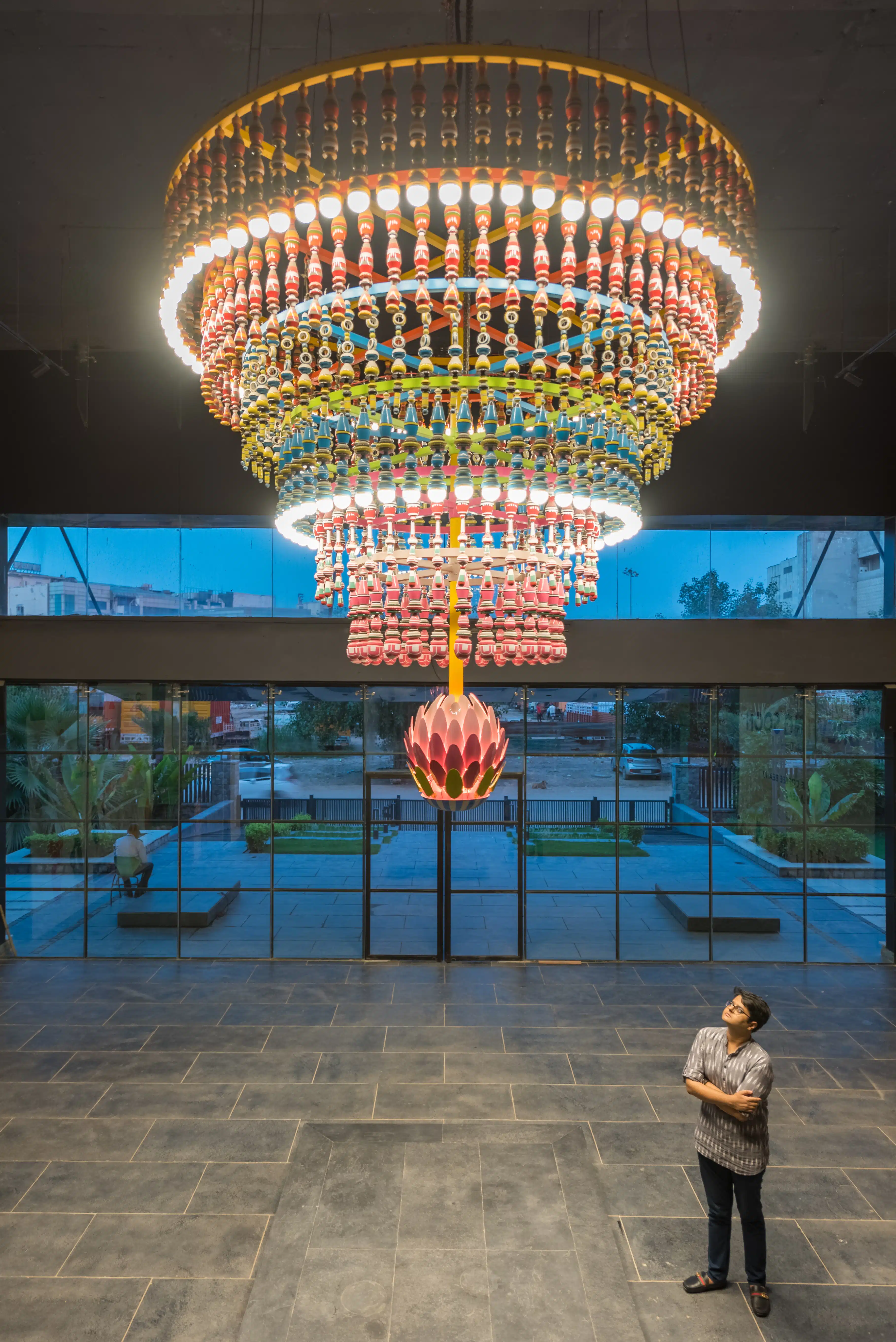
It was a challenge to find craftsmen with the skills and experience to execute what I had in mind. I decided to go down to the root—to the historic town of Channapatna, where this kind of craftsmanship has its origins. It took time and many trials and errors before we found artisans who were able and willing to execute the design.
For the lotus elements in Full Bloom, I wanted something layered and tactile. That pursuit took me to the town of Moradabad that specialises in meenakari work for centuries.
Meenakari is the art of applying coloured enamel onto surfaces by hand, allowing subtle irregularities to remain. These gentle variations create natural undulations, depth and a luminous, living finish.
I remember the days leading up to the final installation of Full Bloom in the atrium. I slept in my car to keep a check on the entire process. The awe I felt when the chandelier was finally lit up for the first time, it made me realise that I was chasing happiness itself.
Talk to us about working with artisans within original geographies like Channapatna or Moradabad?
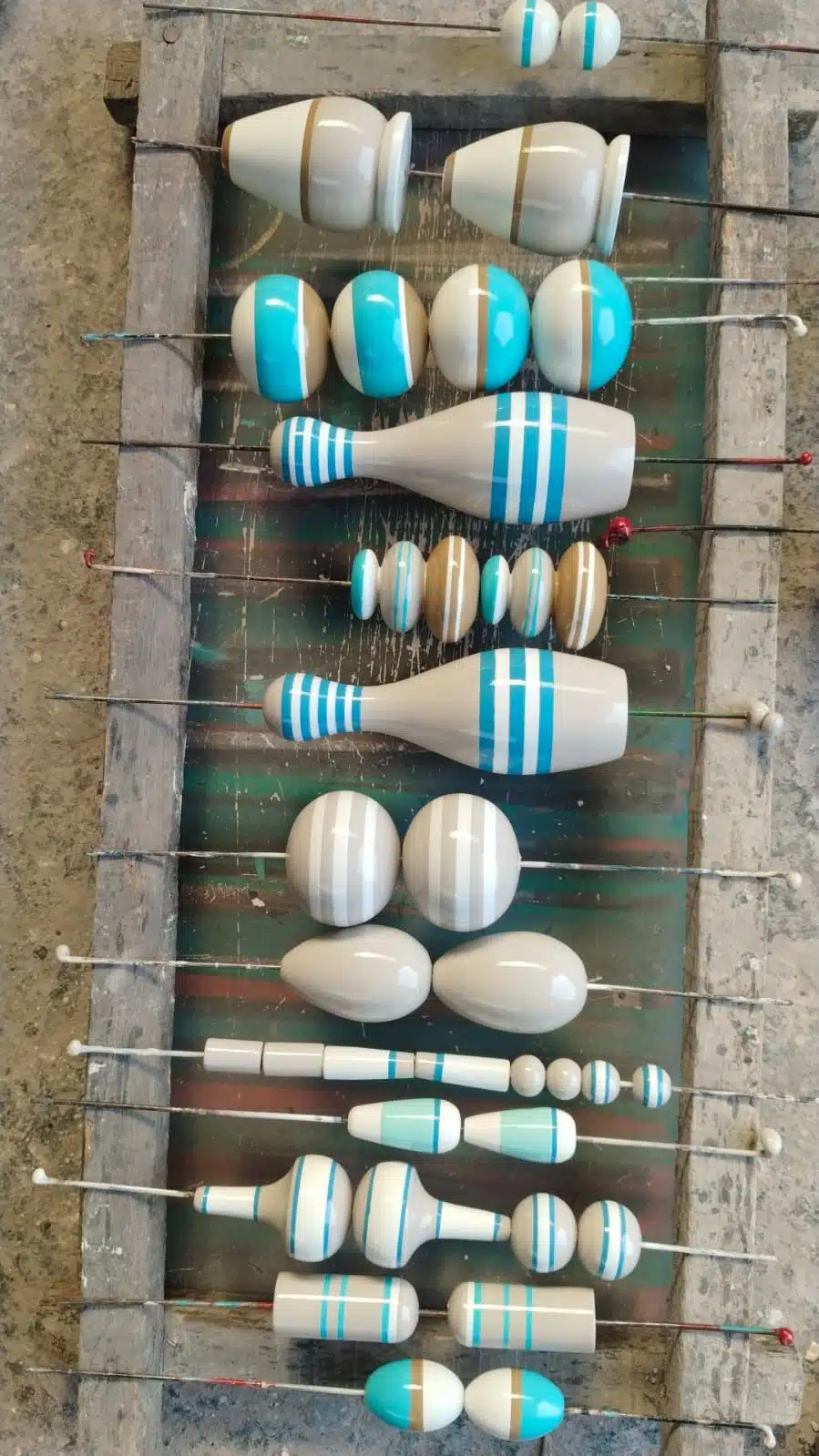 Most artisans I work with are my father’s age or older. They don’t automatically trust city designers with big demands—and they shouldn’t. They know their materials far better than I do. I might imagine colours or forms, but they know how wood behaves, how lacquer dries, what traditions allow flexibility. When something new is created, it may be my design but it is their knowledge that shapes the final object.
Going to the original geographies was necessary to my process. I wanted to make my pieces rooted to the origins. Finding the right artisans for some of these crafts was a challenge. Many times the children of the artisan families have moved to big cities and
are pursuing mainstream occupations, because they no longer see the value in their heritage. I was excited to engage with master artisans and work with them. In the process of creating my pieces, sometimes the younger generation got interested too.
I feel that it is vital to not isolate a craft from its native soil. Very quickly I realised the importance of keeping the artisan in their original geographies. The cluster is the context. You can move the wood, the tools, even the processes—but remove the region and something essential disappears. I also feel that any success the work earns should benefit the community it comes from. Ongoing patronage only matters if the craft remains rooted with its makers—their tools, their practices and techniques, what they have learnt from the generations before them. Otherwise it becomes my Channapatna, instead of Channapatna’s Channapatna.
Tell us about your presentation at IAF 2026 and working with Maria Wettergren?
My work is being presented by Galerie Maria Wettergren, Paris, curated by Maria herself. Maria was the first person who really saw value in my work. That belief has travelled full circle—from her to me, and from me to the artisans I work with. She mentors on vision rather than minutiae, shaping the direction of a body of work. She suggested leaning towards earthy and oceanic colours for this collection and that instinct was exactly the right one. Her curatorial guidance has been pivotal, especially as I learn to navigate the art-world systems that once felt completely foreign to me.
At the India Art Fair our central piece is a large chandelier that draws inspiration from my visit to the Kumbh—the chaos, the rhythm of aarti, tiny brass diyas floating on the Ganges.
We are also showcasing armchairs, sofas and coffee tables inspired by Channapatna toys. They appear in a playful, fairytale way—my own Alice in Wonderland. The scale is playful, theatrical, even fantastical childhood wonder, and the foundation is everyday memories of home.
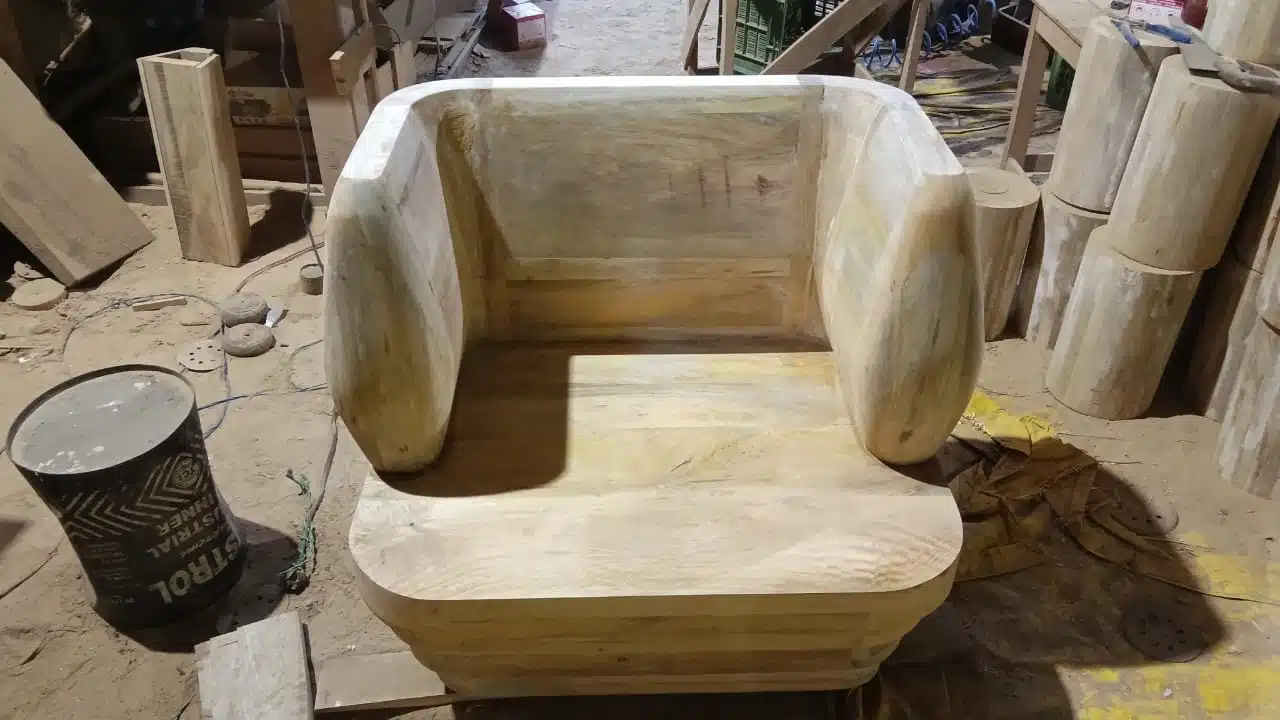 Blowing up ordinary objects into oversized furniture—what does scale mean to you conceptually and what materials help you achieve it?
Scale allows nostalgia to become immersive. I am trying to make art enter everyday spaces; not remain confined to display. A familiar toy blown up into furniture shifts how you relate to it—it becomes something you inhabit instead of simply recall.
Scaling requires experimentation and innovation in materiality. For instance, Channapatna toys are traditionally made with soft ivory wood, but that’s too soft for furniture. We experimented a lot till we found acacia wood to be the answer for us.
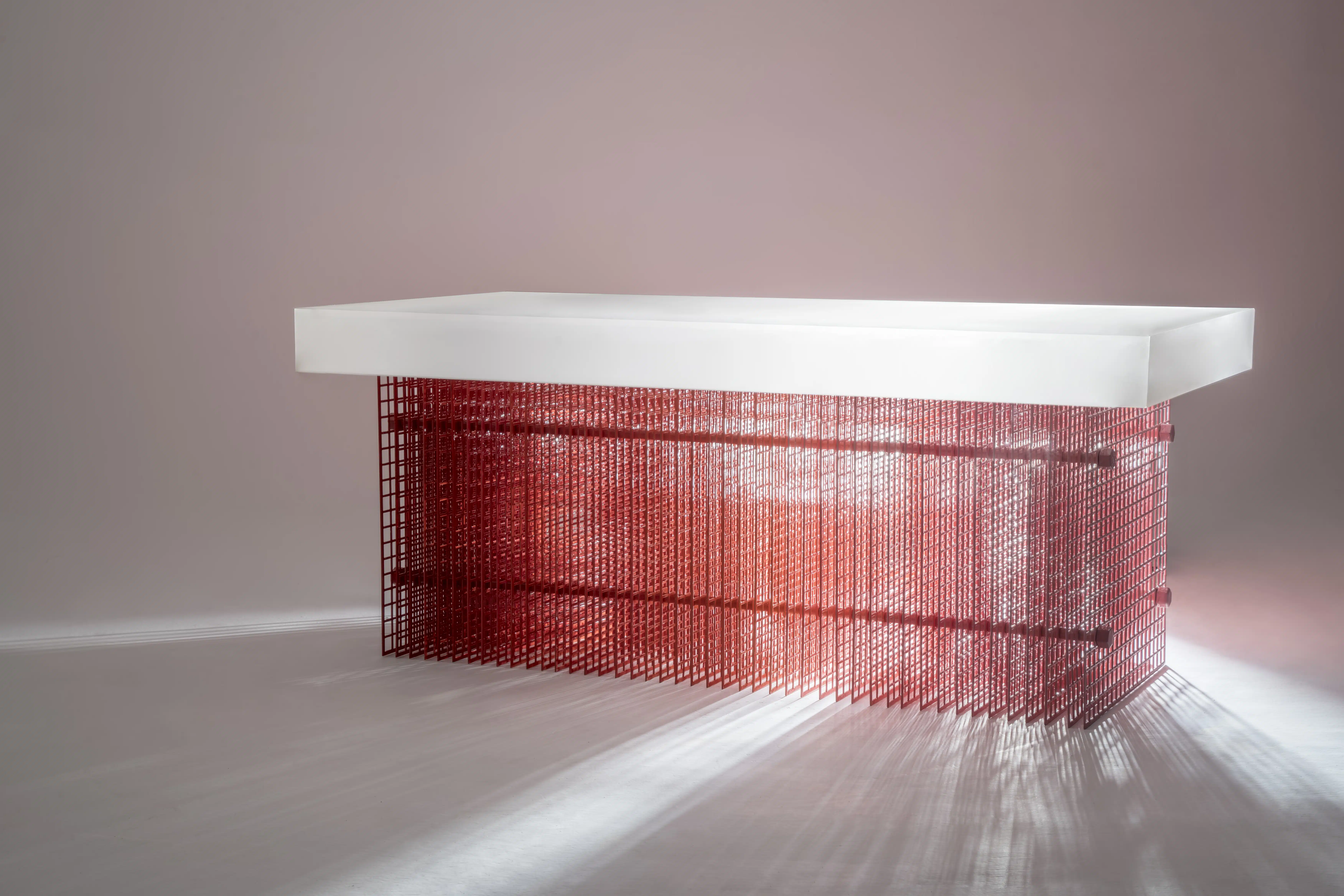
In my studio we use 3D printing extensively for studying models. We are using extremely large 3D printers to create full-scale prototypes before casting them into moulds. I love using new age technologies for ease of prototyping.
 If you weren’t a designer, what would you be doing?
I would still be designing—just quietly, undiscovered, somewhere under a rock.
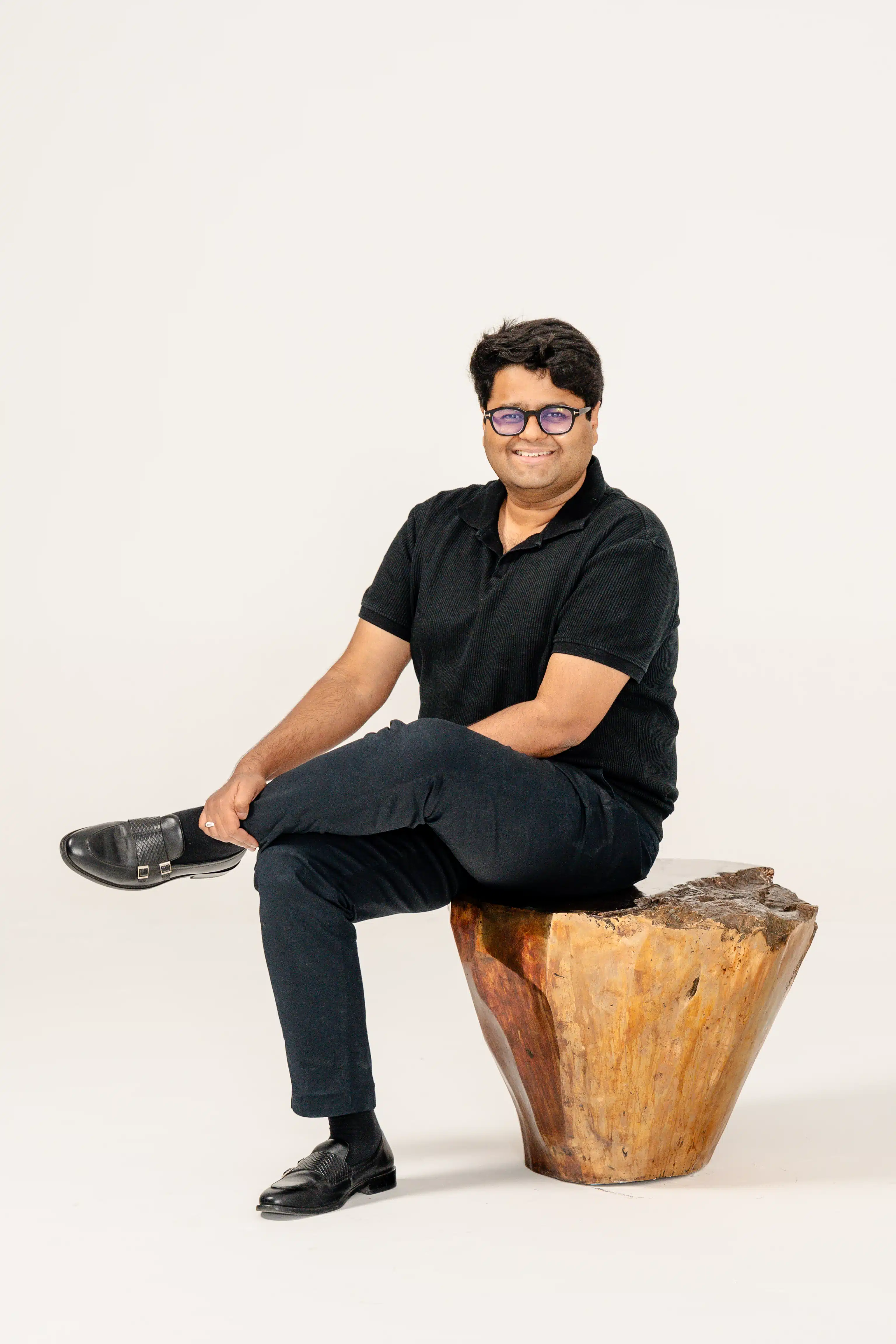 Dhruv Agarwwal is a New Delhi–based designer presenting collectible furniture and lighting shaped by memory, material exploration and long-term collaboration with Indian craft clusters.