
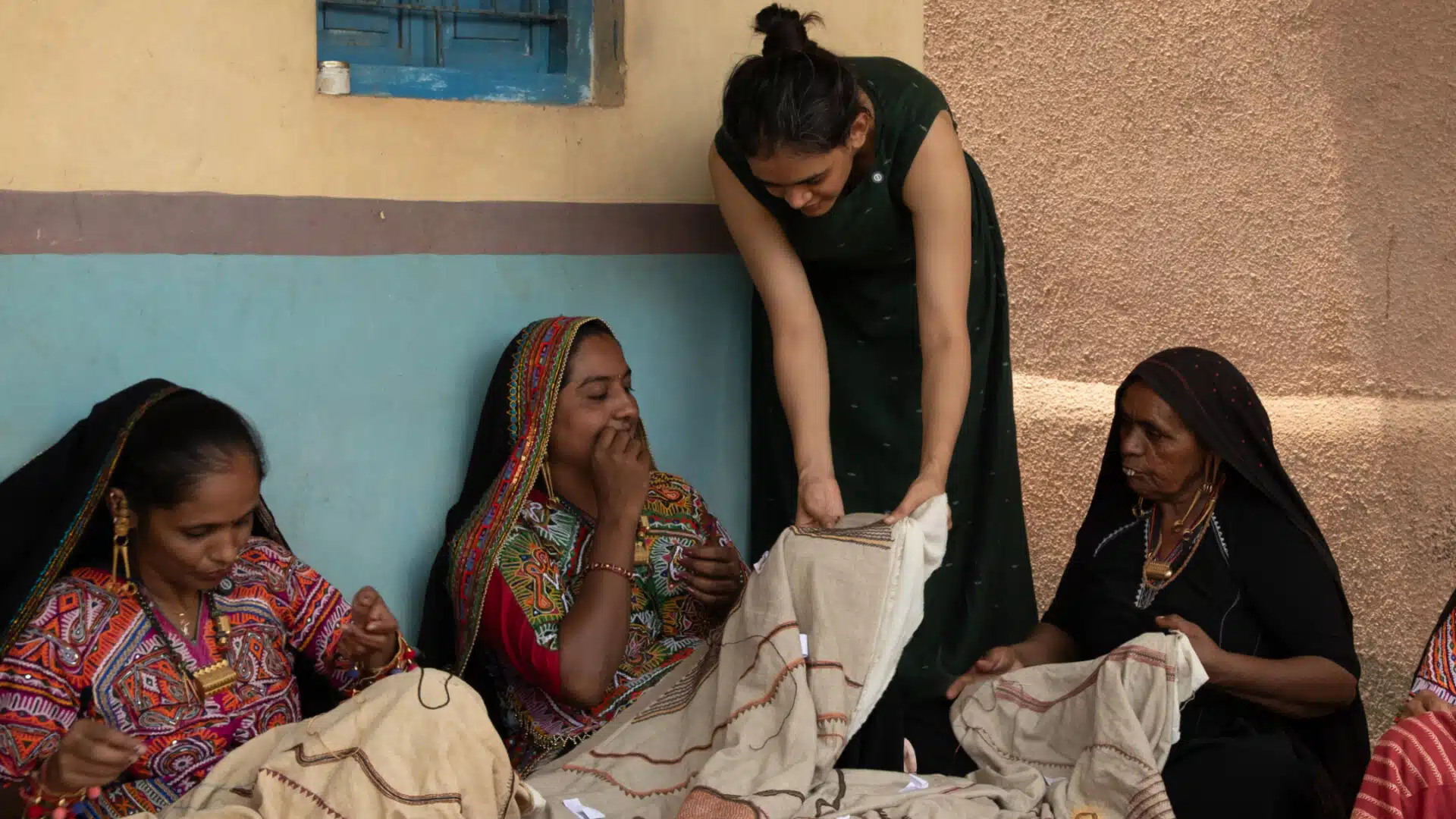
Morii Design works across embroidery, textile art, and collaborative making, yet remains anchored in a single pursuit: allowing craft to evolve without losing its connection to place, people, and memory. Rooted in long-term relationships with women artisans across rural India, the studio approaches embroidery not as ornament or heritage object, but as a living language—capable of holding time, labour, intuition, and care.
Drawing equally from meditation, lived experience, and sustained fieldwork, Morii treats process as a form of listening. Making unfolds slowly, guided by observation before intervention. Stitches accumulate intuitively, carrying the rhythms of domestic life, generational knowledge, and shared authorship. Rather than reproducing tradition, the studio reimagines it through restraint, abstraction, and a contemporary design sensibility.
Material and colour play a central role. Natural fibres and muted, earth-derived palettes anchor the work in the landscapes where it is made—soil, bark, grass, and riverbeds—resisting the visual excess of mass production. What emerges is a practice that is grounded yet open, rooted yet responsive. Before Morii Design’s presentation at India Art Fair, we spoke with the studio to understand the ideas, relationships, and processes that shape its work.
The inception of Morii Design seems deeply personal and purpose-driven. Can you walk us through the journey that led to its founding? What were the pivotal moments or inspirations that sparked its creation?
Morii’s beginnings can be traced back to an early formative experience at the National Institute of Design. During the foundation year, a course that involved travelling to villages and observing everyday life through sketching and quiet attention proved deeply influential. The exercise was not about intervention but about learning to see—homes, landscapes, routines, and social structures—without judgement. That approach stayed with me and gradually shaped how I began to think about design.
After graduating, this inclination toward rural engagement deepened through Jiyo, a World Bank–funded project led by Rajeev Sethi. Working with Sujani embroidery artisans in Bihar and Kalamkari artisans in Andhra Pradesh, I spent extended periods living in villages and collaborating closely with women artisans. What became clear during this time was how profoundly regular work and stable income could transform lives—not only economically, but emotionally and socially. Confidence, independence, and dignity emerged alongside craft. That experience became my driving force: to continue working in rural spaces, particularly with women, and to find ways to add value to traditional crafts through design.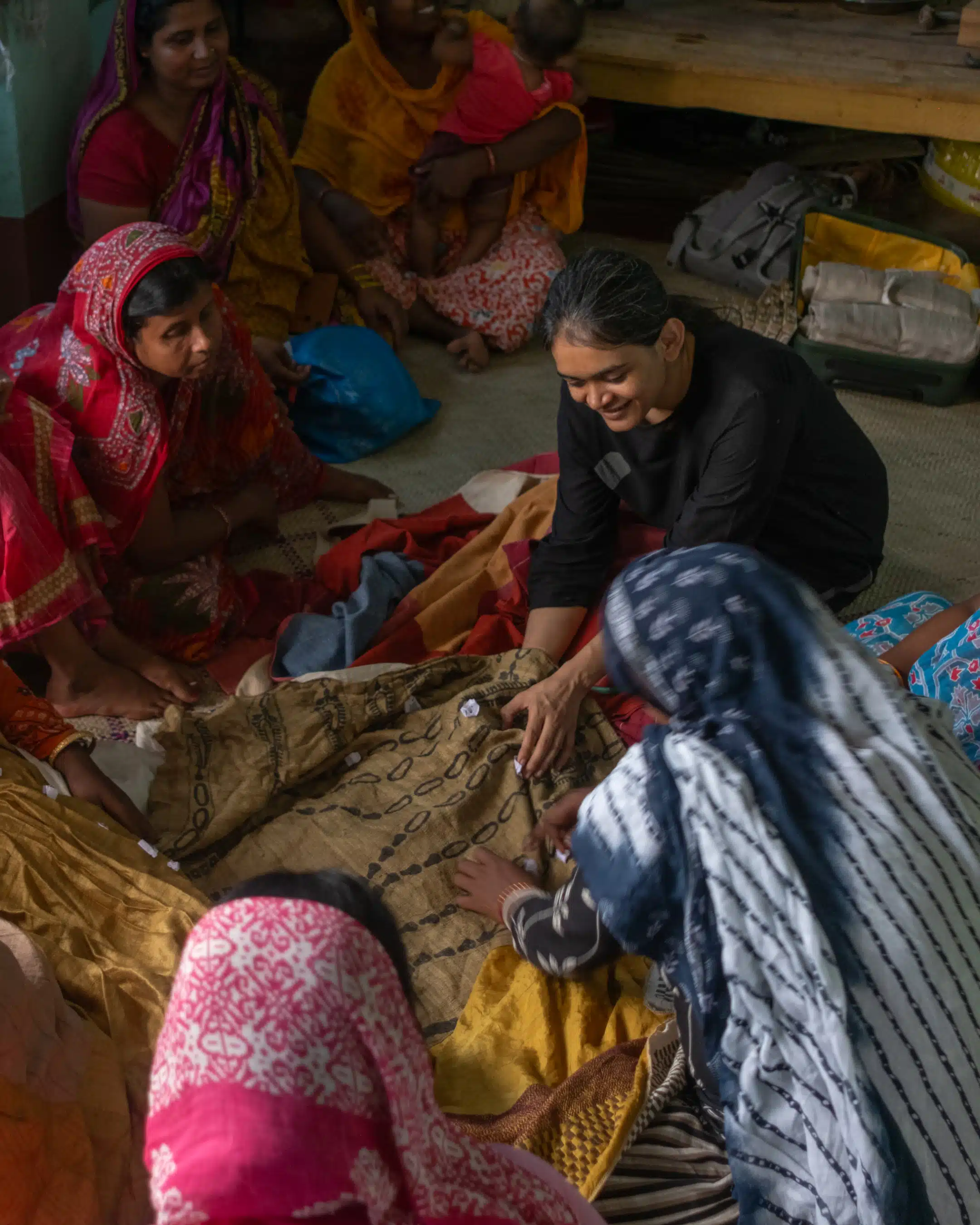
Around the same time, E.F. Schumacher’s Small Is Beautiful offered a philosophical anchor. Its critique of mass production and advocacy for human-scale, decentralised systems resonated deeply with what I was witnessing on the ground. The idea of “production by the masses” felt both ethical and urgent.
Morii was founded in 2019 with a clear intention: to work closely with women artisans and create design-forward work that reimagines traditional crafts without detaching them from their roots. Interestingly, wall-based textile artworks were not part of the original plan—they emerged organically from process-led explorations.
A defining personal moment arrived in late 2018, during an exhibition curated by Rajeev Sethi to mark the conclusion of Jiyo. It was here that Kabir, who would later become my partner and co-founder, saw my work for the first time. His belief in the practice and his instinct that it needed its own platform gave me the final push to begin Morii.
Morii emphasises the fusion of traditional craftsmanship with contemporary design. What core philosophies or principles guide this integration, and how do they manifest in your work?
In the communities we work with in Kutch, embroidery is a generational skill—one that women learn in childhood and traditionally use to create deeply personal objects such as wedding garments and household textiles. Over time, however, the influx of machine-made materials and mass-produced embellishments has diluted both the quality and cultural depth of the craft.
Our approach is not about returning to an imagined past, but about restoring intention and finesse. We aim to bring back the discipline and care that once defined these practices, while allowing new visual languages to emerge. Because we work from a contemporary design mindset, the fusion happens naturally: traditional techniques are reinterpreted through restraint, abstraction, and relevance to the present moment.
Your designs exude a sense of calm and connection. Where do you draw inspiration from, and how do these sources influence your creative process?
Meditation has been a constant presence in my life since childhood. Introduced to it at a young age by my parents, I grew up attending meditation camps and spending extended periods in meditation communes. While I may not have fully understood the practice then, it created a deeply grounding environment.
Today, meditation continues to shape how I work. I spend time every year deepening my practice, and daily meditation is essential to my routine. When I begin creating, I try to start from a place of emptiness—of stillness. Most of my works emerge intuitively, guided by a sense of flow rather than a fixed outcome.
With over 165 women artisans from 12 villages collaborating with Morii, how do you ensure that their traditional skills are preserved and celebrated? Could you share insights into the training programs and how they impact these communities?
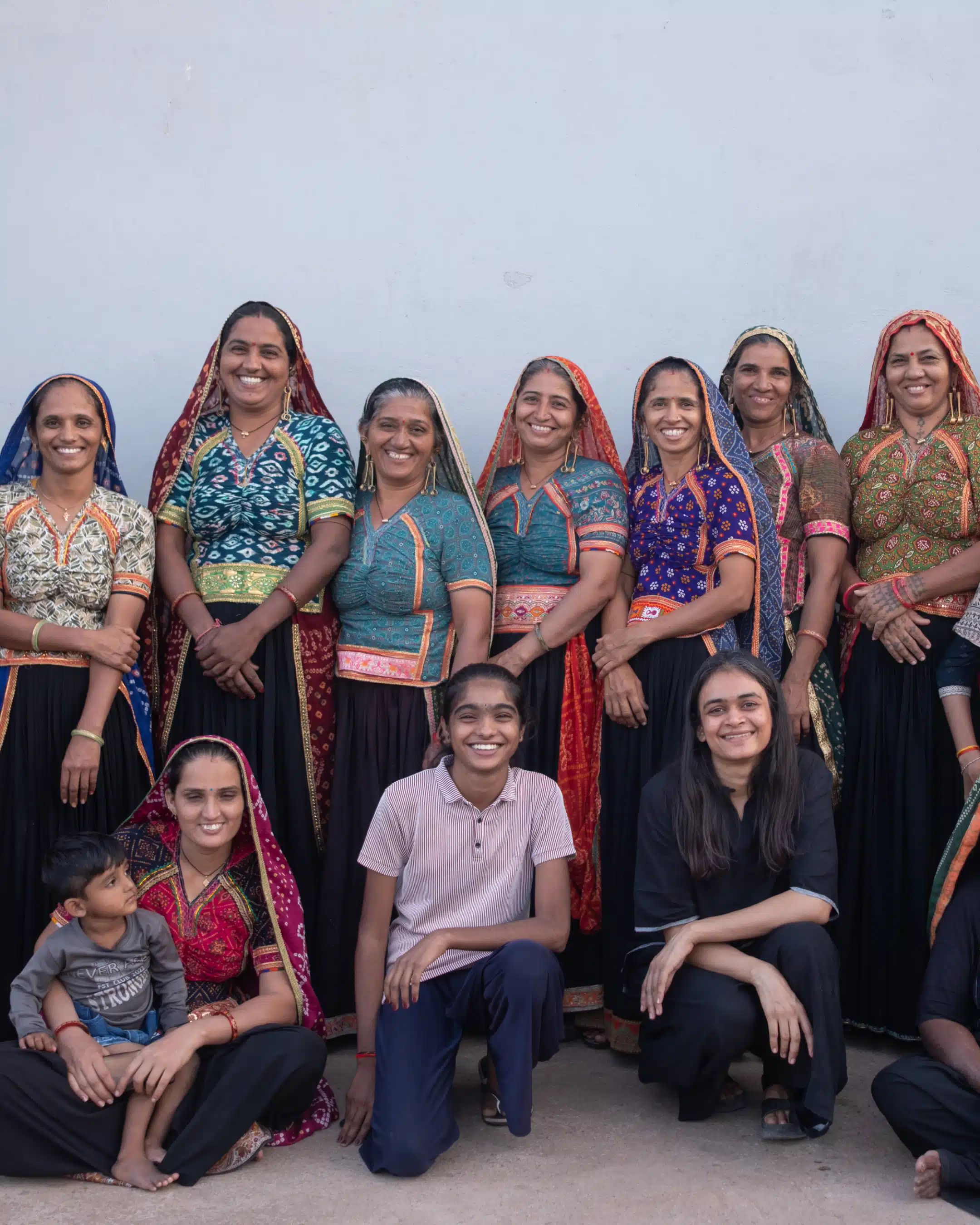
Morii began with just 12 artisans from the Jat community in Kutch. Over five years, this has grown into collaborations with more than 165 women across 12 villages, working with Jat and Rabari embroidery, Sujani, Kantha, and Bela block printing.
Whenever we engage with a new craft, the first workshop is intentionally open-ended. Artisans are invited to create freely, using techniques and motifs they are most comfortable with. This allows us to document existing knowledge and understand the current state of the craft before introducing any design intervention.
Parallel research takes place through books, conversations with elders, and the study of antique embroidered textiles. Over time, we have built a small archive of historic pieces that serve as reference points for understanding the craft in its original form. From this foundation, we develop stitch libraries through experimentation with colour, form, and technique. These are then shared through paid training workshops, creating a space where tradition and contemporary design intersect.
Morii is known for reviving fading craft forms. Could you provide examples of specific techniques you’ve worked to preserve, such as Sujani or Rabari embroidery? How do you maintain authenticity while adapting these crafts for contemporary audiences?
Rather than revival, we think of our work as reinvention. We begin by understanding how a craft originally functioned—its social context, use, and meaning—before examining how its identity has shifted due to market pressures and mass production.
Rabari embroidery, for instance, was historically created for personal use. As this practice has declined, the craft has lost much of its emotional depth. At Morii, we develop a new visual language using these traditional techniques, guided by contemporary sensibilities and an intuitive design process.
One principle remains non-negotiable: geographical integrity. We work exclusively with heritage artisans in the regions where each craft originated. We do not displace crafts from their contexts; instead, we allow them to evolve within their own landscapes and communities.
Transparency is also central to our practice. Every artwork carries information about where it was made and who made it, reinforcing the idea that the work is inseparable from its makers and lineage.
Among your various projects, is there one that holds particular significance for you? What made it special, and what did you learn from the experience?
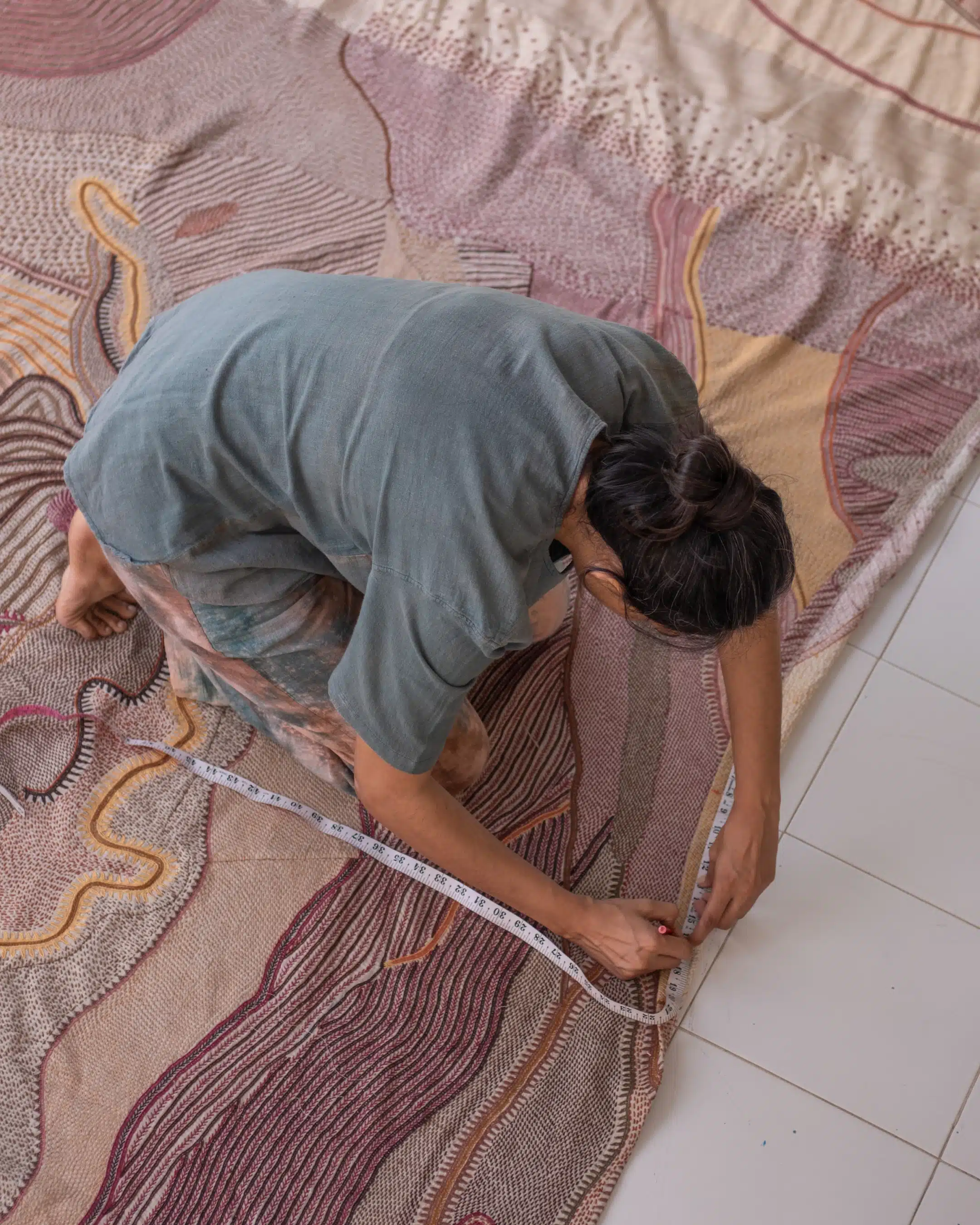
The textile map of South India (the Deccan Plateau), created for Living Lightly, remains especially significant. The project translated geography into embroidery—mountain ranges formed through stuffed fabric, forests represented by dense clusters of stitches, rivers traced using mirror embroidery, and crops rendered through subtle variations in running stitch.
Combining multiple craft traditions and material waste, the work expanded my understanding of embroidery as both a tactile and informational medium. It demonstrated how craft can function as storytelling, data visualisation, and emotional mapping simultaneously.
How large is your current team, and what roles do they play in bringing Morii’s vision to life? Looking ahead, how do you envision the studio evolving in the next five years?
Morii operates with a small, closely knit team of five. Kabir, my partner and co-founder, leads branding and communication. Two in-house designers manage design development, client communication, and on-ground coordination with artisan groups, while studio operations are overseen internally.
In addition, we work with in-house embroidery artisans and a tailor who support sampling and finishing. We are currently developing a new workspace on a one-acre farm, envisioned as both studio and gallery. Designed as an experience centre, it will allow visitors to engage with processes such as block printing, natural dyeing, hand painting, and embroidery.
Looking ahead, one of our central ambitions is to nurture the artistic potential of younger artisans and expand our work across more craft forms in India. We hope to contribute to a shift in how craft is perceived—not as something static or nostalgic, but as a dynamic, expressive, and deeply contemporary practice.
Morii Design is a contemporary textile practice rooted in long-term artisan collaborations across India. Established by designer and co-founder Kabir, the studio’s work spans hand embroidery, textile-based artworks, and site-responsive commissions, foregrounding process, material sensitivity, and place-based making.