
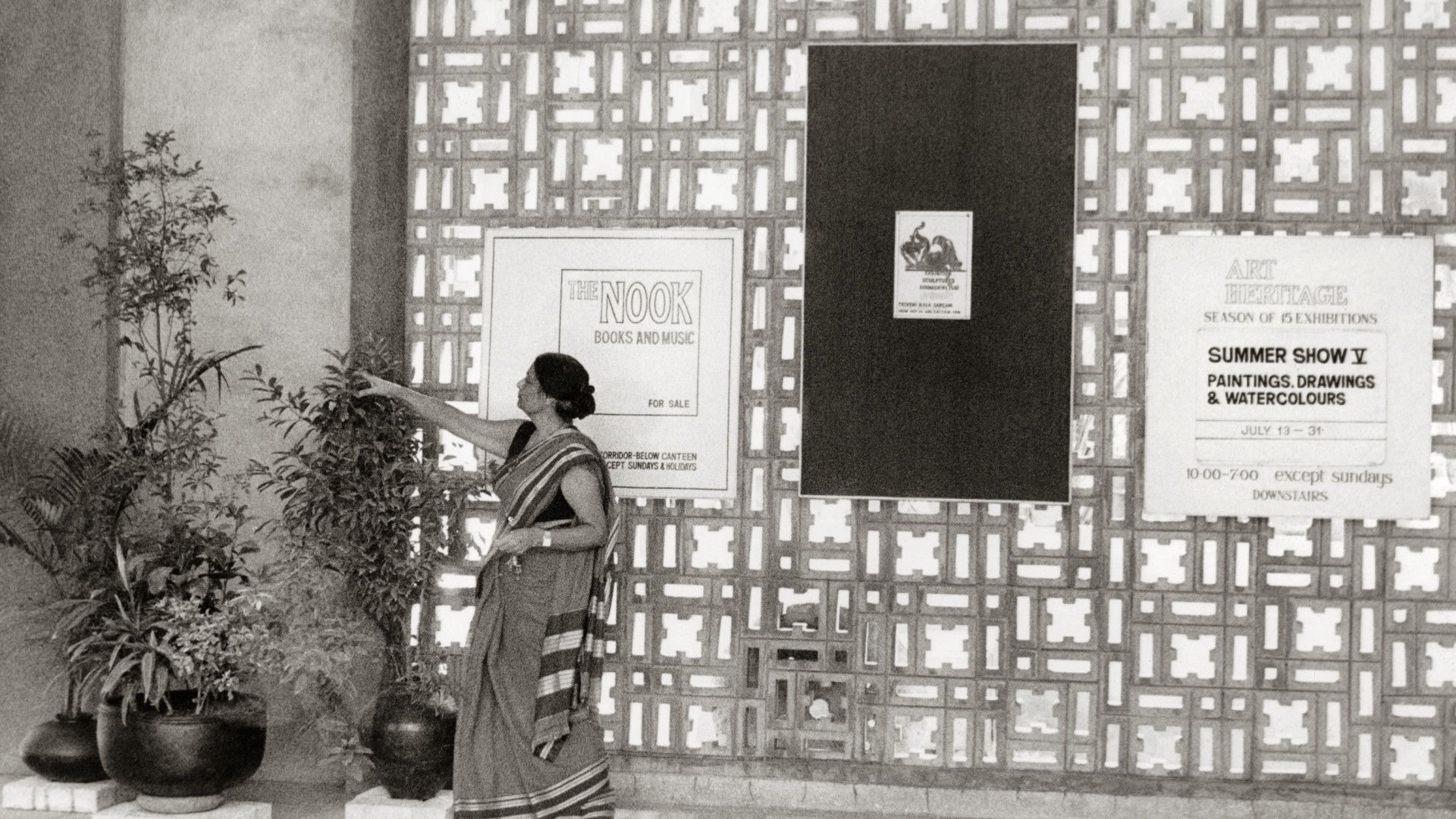
For three quarters of a century, Triveni Kala Sangam has stood as one of Delhi’s most enduring cultural institutions—a place where art, craft, music, theatre and ideas have intersected freely, without gatekeeping or commercial constraint. Established in 1950 by the late Ms. Sundari K. Shridharani, and realised in built form by the celebrated architect the late Mr. Joseph Allen Stein, Triveni was conceived as more than a gallery: it was a cultural campus, an open forum for artistic exchange, and a home for both established and emerging practitioners. Over seven decades it has operated as a non-profit that does not take donations, offering artists and audiences alike a rare blend of access, education and practice, grounded in intellectual generosity and institutional independence.
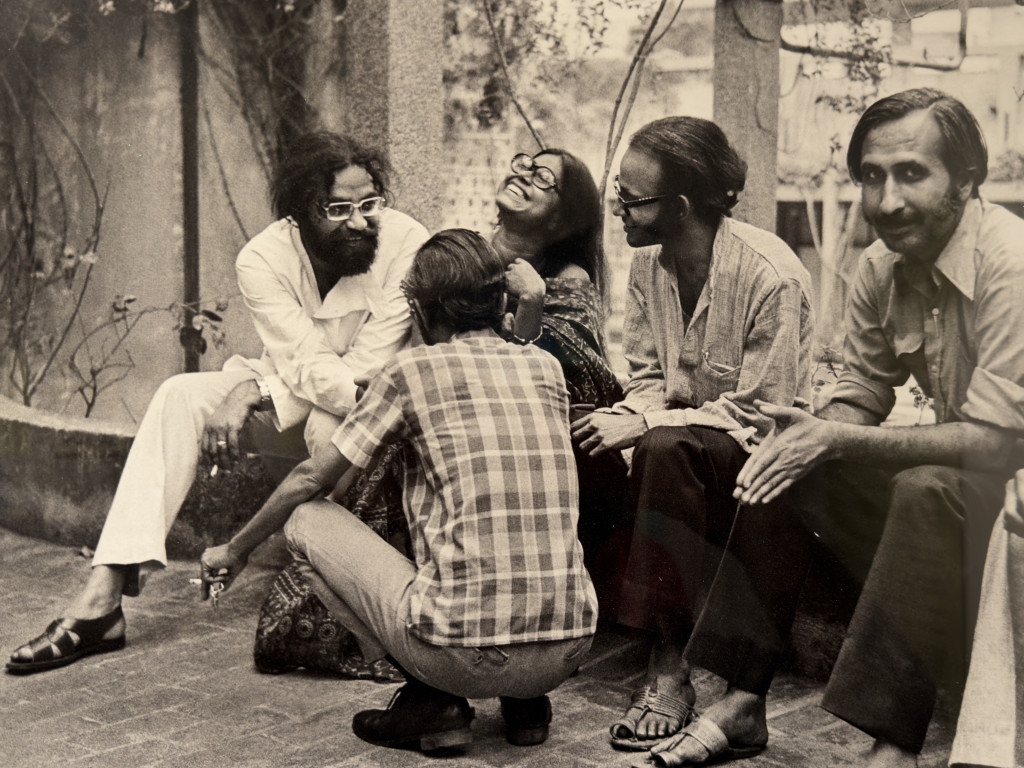
Triveni completes 75 years this year. What does this milestone mean to you, and to Triveni as an idea?
Seventy-five years is not just any anniversary; it is evidence of continuity. Triveni was never conceived as a gallery in isolation. Since the beginning, my mother imagined it as a complete cultural ecosystem, where visual arts, music, dance, theatre and education exist together. That idea has survived political change, financial difficulty, and shifting cultural priorities. The fact that Triveni still functions in the way it was intended is, to me, our institution’s real success.
For many people, Triveni Kala Sangam and Sundari K. Shridharani are inseparable. How do you see her legacy today?
For our generation, Triveni was my mother. She lived every aspect of it. What often gets missed is how deeply she worried about artists—not abstractly, but practically. During exhibitions, she was less concerned about how the show looked and more anxious about whether the artist sold work. I remember her being genuinely happy if someone sold even three paintings. That mattered to her more than institutional acclaim. Keeping fees low was never a strategy; it was a moral position shaped by her understanding of artistic struggle.
The building itself, designed by the influential American architect, Joseph Allen Stein, is central to Triveni’s identity. How does architecture shape the experience of this space?
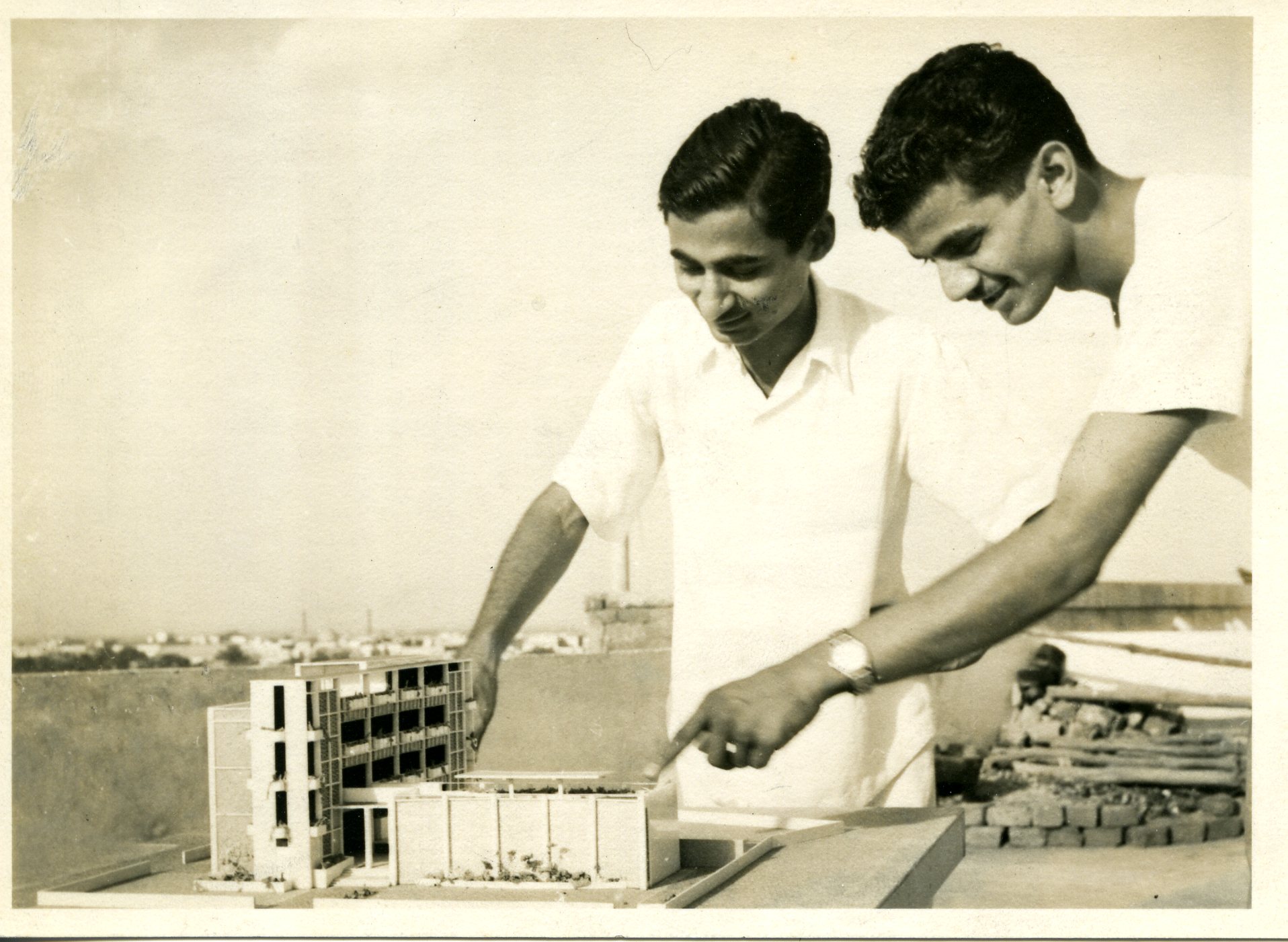
My mother had almost no money when she approached Stein. She told him this upfront and gave him absolute freedom. Stein understood something very important—that physical space affects mental freedom. Low ceilings confine the mind; openness allows thought to expand. He responded not to a brief, but to a belief. What emerged was an environment that encourages lingering—people sit, walk, talk, return. Seventy-five years later, it continues to function exactly as Stein intended.
Triveni is a shared space across disciplines. Was this always central to its vision?
Completely–my mother was a dancer before anything else. She trained at Uday Shankar’s institute, where dance, music and visual arts were inseparable. Later, her exposure to Shantiniketan reinforced this idea of exchange across disciplines. Triveni grew directly from that experience and the belief that artists and teachers must meet, talk and influence one another. It was never meant to be a place of silos.
Triveni has witnessed decades of exhibitions and performances. Are there any moments that defined what it has become?
No single event defines Triveni. The relationship has always been reciprocal—Triveni shape artists, and artists shape Triveni. What has remained constant is our commitment to emerging practitioners. Young artists were always shown alongside established names. The audience drawn by recognised artists created spillover for those just beginning. That balance has been essential to Triveni’s character.
Supporting emerging artists remains central to Triveni even today. How is that sustained?
We deliberately underprice our spaces. First exhibitions are critical, and they must be accessible. My mother used to tell me that people who have never struggled cannot understand what it means to have no food on the table. That awareness stayed with her. Artists need to be able to work independently, without the pressure of unsustainable costs. This is why even today, our smaller galleries remain intentionally affordable
Triveni has consistently resisted commercialisation, particularly through its open-access model. Why is this so important?
Since inception, the operative philosophy of Triveni is for anyone with or without means to be able to experience high-quality art. Performances at Triveni are not ticketed. Even today, when programmes are booked well in advance, we do not allow ticket sales. This is not accidental; it is a conscious refusal. We also do not accept government funding or personal donations. That independence is difficult, but it protects the institution from obligation and influence. Integrity has always mattered more than expansion.
Triveni often feels less like an institution and more like a public space. Was that intentional?
Very much so. People walk in without purpose—to sit in the garden, to pass through, to pause. Someone may come for a performance and stay for a conversation. Someone else may arrive for a class and discover an exhibition. That freedom of movement is essential. Art should not feel gated. It should be part of everyday life, not a destination that requires permission.
In a city now shaped by private galleries and art fairs, where does Triveni locate itself?
Triveni is not only a gallery; it is a teaching institute. We teach music, theatre, dance and visual arts under one roof. Education anchors everything we do. Other institutions may be larger or more resourced, but Triveni is an experience in itself. That has not changed.
Education seems deeply embedded in Triveni’s structure. How do teachers and practitioners engage with the institution?
Our teachers do not stay for money. They stay for freedom. They are trusted, not monitored. They are allowed to teach in ways they believe in. Creative output suffers when control increases. Here, teachers have space—to teach, to go home, to live their lives. That freedom sustains the institution quietly but powerfully.
Legacy often extends beyond founders. How is Triveni’s history carried forward today?
Not only through artists, but through everyone who works here. Many of our teachers and staff would not leave for higher pay elsewhere, because what they receive here is different. Triveni operates on principles rather than incentives. That continuity is its real inheritance.
Your father’s contribution is less widely known. How does his legacy intersect with Triveni’s story?
My father, Dr. Krishnalal Shridharani’s story is essential. He was a freedom fighter, the youngest member of Gandhi’s march at just seventeen. Later, he became a writer and thinker, refused American citizenship despite being offered it, and lived by principles of restraint and independence. That ethical grounding shaped our household. Triveni’s refusal to compromise—financially or ideologically—comes from both my parents.
Finally, what does Triveni represent to you today?
It is like a railway track that keeps running. Many institutions will come up—bigger, newer, more spectacular. Triveni will continue because it is built on experience, not scale. As long as that experience remains honest, its future is secure.
Amar Shridharani is the Honorary General Secretary of Triveni Kala Sangam, carrying forward an institution shaped by openness, integrity and artistic freedom. At seventy-five, Triveni remains a living cultural space rooted in its founding vision and responsive to the present.