

TEXT: YUKTI V. AGARWAL
On a characteristically sultry, overwhelmingly humid day, armed with a flask of ice-cold water and a few protein bars, we attempted to navigate what felt like an impossible amount of art in a single visit. Across studios, classrooms, corridors, and exhibition spaces, we encountered an astonishing range of practices: works grappling with the realities of resource extraction and environmental change, speculative projects imagining future space programmes, deeply personal narratives, and ambitious experiments that ranged from the intimate hand-held to larger-than-life installations spanning sculpture, painting, video, performance, and new media.
Baroda occupies a singular position within the landscape of Indian contemporary art. While many arrive for their bachelor’s or master’s degrees, an equally remarkable number stay long after their formal education ends. During our visit, we spent time in the studios of artists who have made the city their home: from Tito Stanley’s kaleidoscopic labyrinth of a home-studio to Merci Maku’s intimate workspace, where years of recipes, notes, and drawings sat carefully preserved in neatly spiral-bound books stacked in orderly piles.
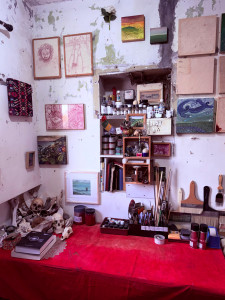
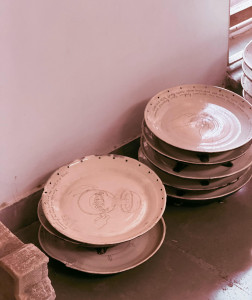
One might even argue that Baroda is India’s great artistic incubator. Since its founding in 1950, the Faculty of Fine Arts at MSU Baroda has shaped generations of artists, thinkers, and educators. Its alumni and faculty include figures such as Mrinalini Mukherjee, K. G. Subramanyan, Jyoti Bhatt, Nilima Sheikh, Nasreen Mohamedi, and Bhupen Khakhar, whose contributions helped establish what would later become known as the “Baroda School.” The institution’s longstanding emphasis on critical inquiry, experimentation, and dialogue continues to reverberate through the city’s artistic culture today.
What is it about Baroda that compels artists to stay?
Why does a city far removed from the commercial centres of Mumbai and Delhi continue to produce such a disproportionate number of significant artistic voices? At one point during our rushed day of studio visits and exhibition hopping, artist Anikesa Dhing remarked that Baroda’s relative quietness can be conducive to artistic production. There are fewer distractions, more time, and perhaps more permission to focus on the work itself. After spending time in the city, it was difficult to disagree.
Yet the city’s creative vitality cannot be attributed to its pace alone. Rooted in a tradition of cultural patronage fostered by Maharaja Sayajirao Gaekwad III, Baroda’s artistic ecosystem continues to be sustained by a network of contemporary patrons, institutions, and artist-led initiatives. Organisations such as Space Studio and Ark Foundation for the Arts have expanded opportunities for artists through residencies, research, archiving, and public programming, ensuring that Baroda remains a vital site for artistic experimentation and exchange. During our time in the city, these qualities were not only evident in its institutions and infrastructure, but also in the artists themselves. Perhaps this is what ultimately distinguishes Baroda: not simply its institutions, patrons, or history, but the way these conditions find expression in the work being produced there today.
The city seems to offer something increasingly rare—a space where artistic practices can develop slowly, collectively, and with conviction.
Months later, what stays with us is not necessarily the most resolved work. Neither is it the projects executed with the greatest technical skill, nor those that occupied the most space. Instead, it is a handful of artists whose practices seemed to embody many of the qualities that make Baroda such a fertile artistic environment: curiosity, experimentation, rigour, and a willingness to pursue ideas in unexpected directions. Long after leaving the city, we found ourselves returning to their works in conversation, in writing, and in thought.
Here are four artists from this year’s annual display that we still can’t stop thinking about.
Vivek Panchal
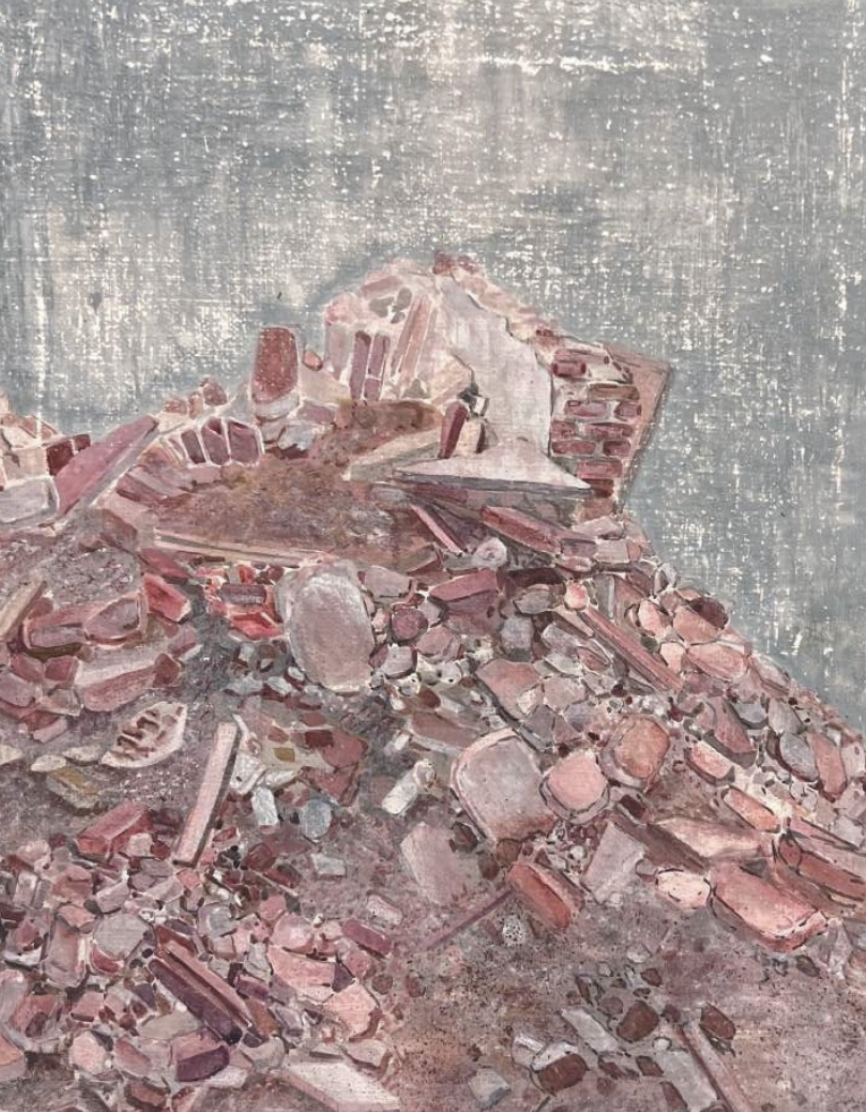
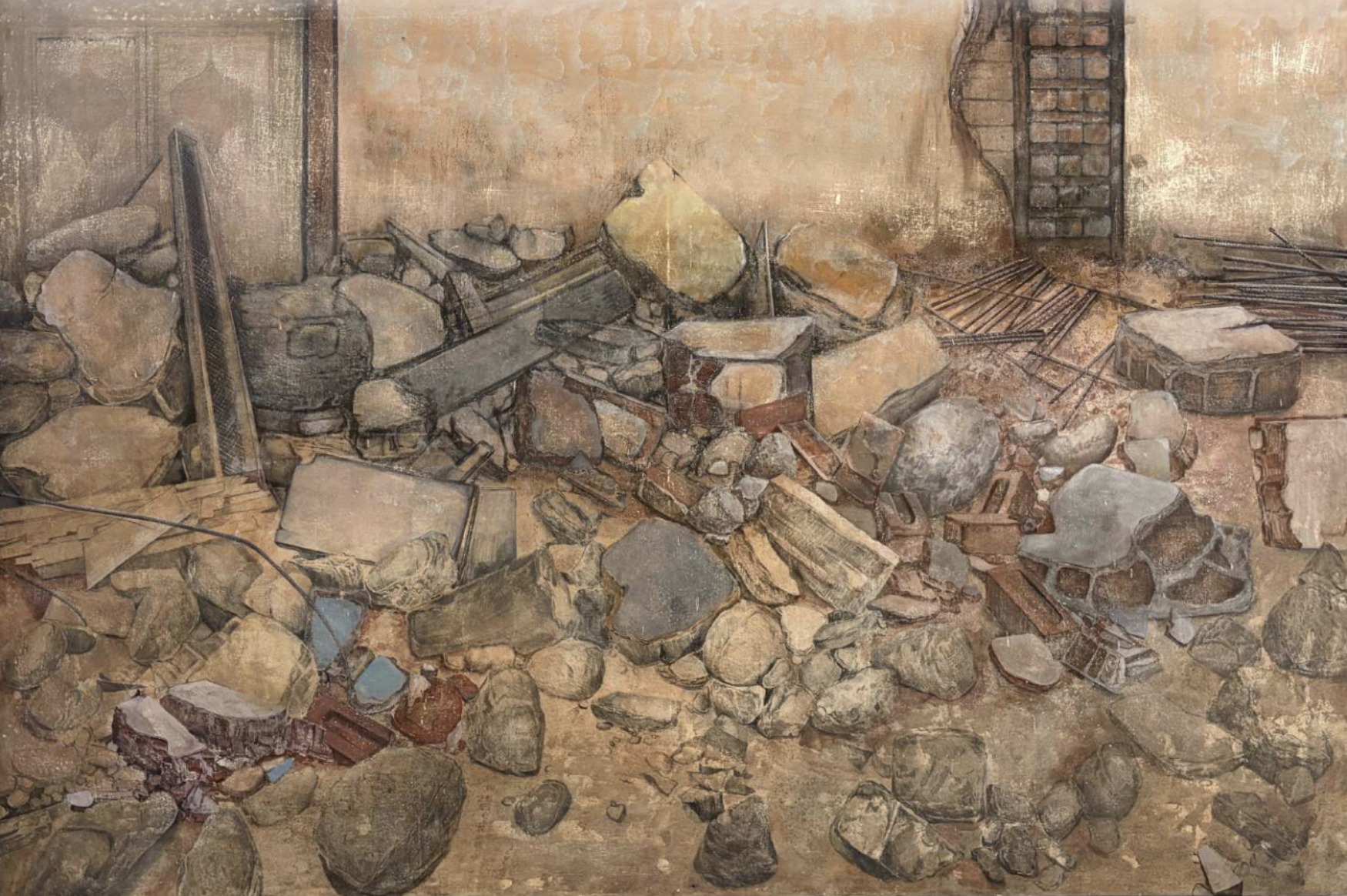
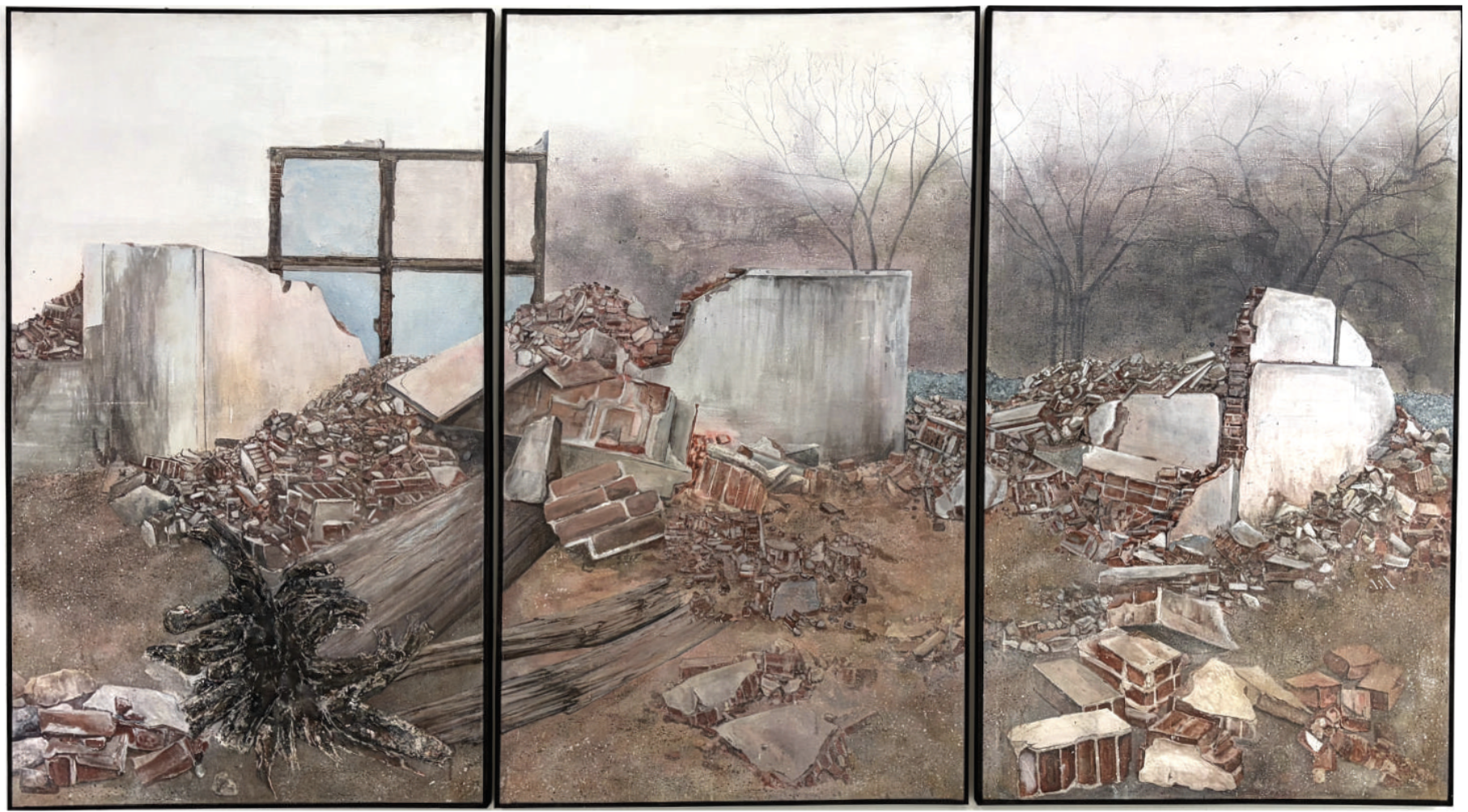
There is a tendency to think of urbanisation through grand narratives: smart cities, high-rise infrastructure projects, the “real-estate boom”, and promises of progress. Vivek Panchal, however, directs his attention to the in-between moments of transformation—the period after demolition has begun but before reconstruction is complete. It is here, amidst piles of rubble, exposed brickwork, stacked construction materials, and partially dismantled homes, that he captures a moment in time, one that can never be revisited, yet becomes a portrait of a place on the verge of becoming something else.
At first glance, the surfaces of his works appear weathered by time itself. Painted onto wood, canvas, paper, and found materials, the images are scratched, distressed, and worn. Layers of paint accumulate only to seem as though they are peeling away again. Colours fade into one another like sun-bleached walls; marks fracture across the surface like cracks running through concrete. The paintings feel less constructed than excavated, as if they have emerged from the very sites they depict.
This material language mirrors the worlds Vivek observes. His paintings occupy neighbourhoods caught between disappearance and renewal, places where familiar rhythms are interrupted by scaffolding, debris, and uncertainty. People rarely appear directly, yet their presence is everywhere—in the abandoned wall, the pile of salvaged materials, the traces of habitation left behind. What emerges is a portrait of urban change told not through architectural ambition, but through its residue: the fragments, scars, and material traces that remain after what was once quotidienne has begun to slip away.
Learn more about Vivek’s practice here, and should you be in interested in connecting with him, please contact him directly here.
Darshin Kapadi
“I aspire to be less human” is not the sort of sentence one expects to encounter in an artist statement. Yet it feels like an apt entry point into Darshin Kapadi’s work.
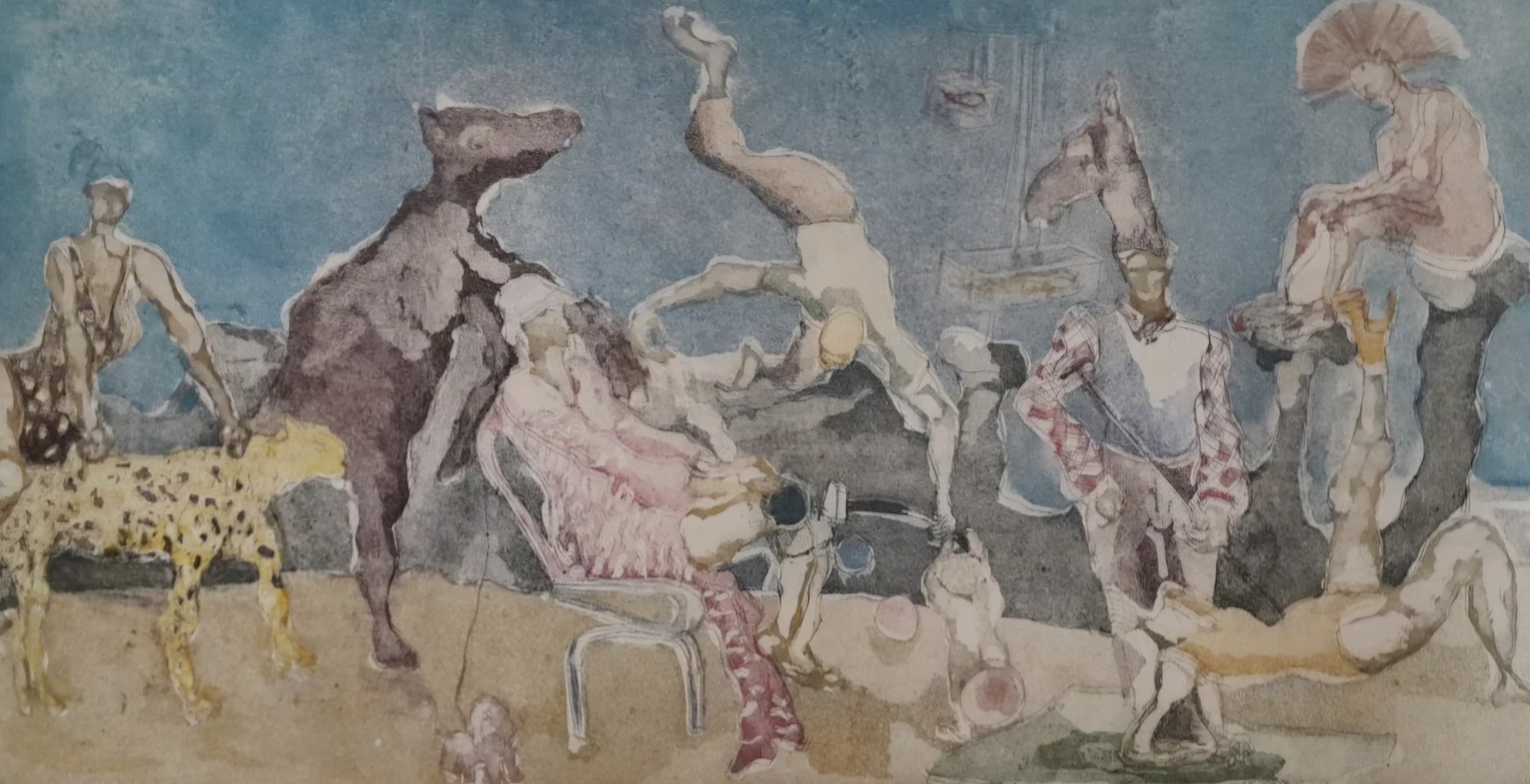
At first glance, her paintings appear familiar: horizons, water, clouds, shifting skies, and fragments of coastline. Look longer, however, and they begin to slip away from representation. Forms dissolve into the atmosphere that surrounds them, and boundaries between sea and sky become uncertain. Light drifts across expansive, immersive surfaces built through soft, layered passages of paint. Working at scale, she constructs atmospheric fields that resist containment within the frame. Within these shifting environments, perception itself becomes unstable. Figures occasionally surface, but they remain fleeting—suspended mid-movement and never fully resolved into narrative or form. They register less as characters than as passing presences within a broader atmospheric logic.
Growing up in a coastal region, Darshin draws upon the rhythms of the sea, but her works are not seascapes in any conventional sense. Waves, tides, mist, and shifting horizons become metaphors for states of consciousness, carrying thoughts that rise, crest, and recede. In this continual movement between form and dissolution, the paintings hold open a space where perception itself seems to breathe, hover, and slowly fade.
Learn more about Darshin’s practice here, and should you be in interested in connecting with her, please contact her directly here.
Aakash Sharma a.k.a. Sky
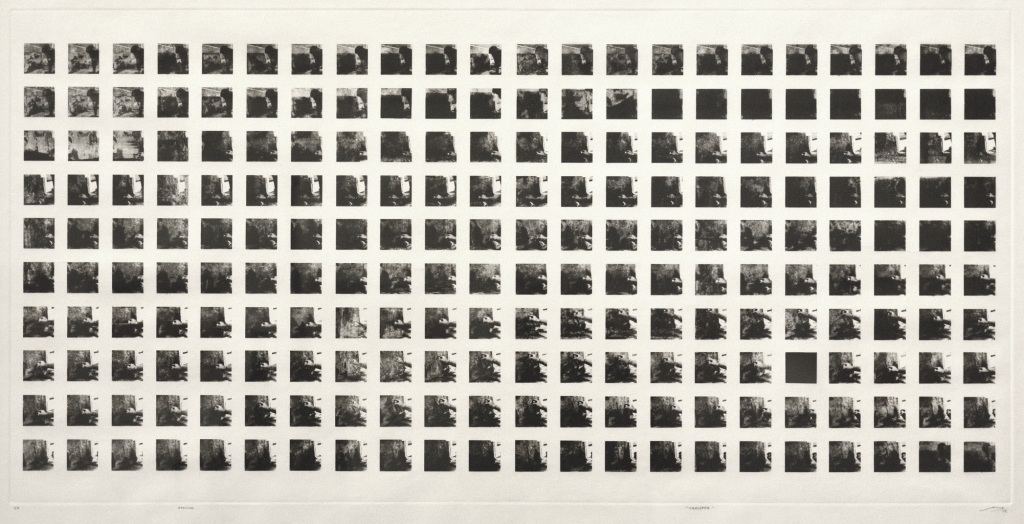
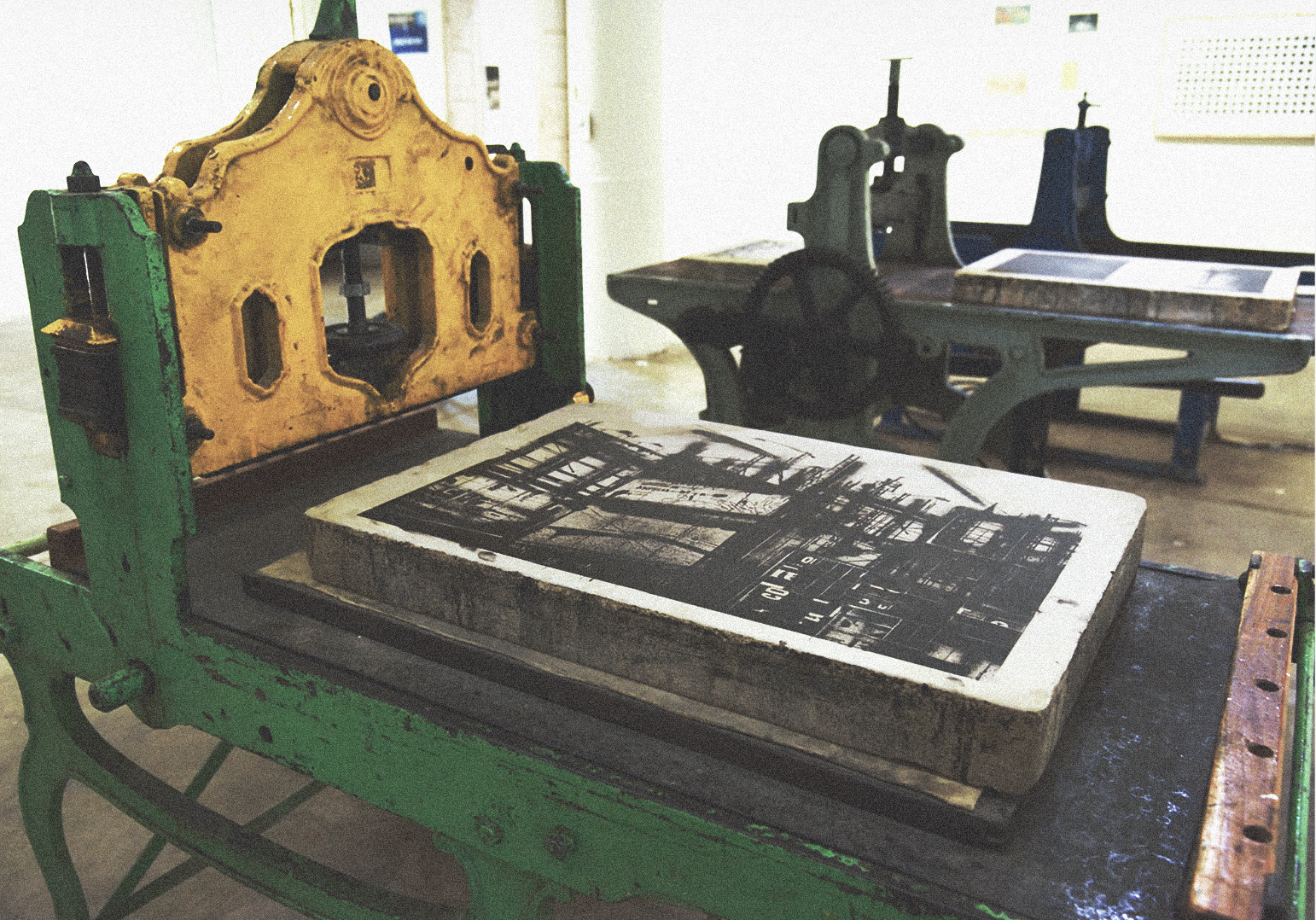
Experiencing Aakash Sharma’s work requires a constant adjustment of scale. In the annual display, his practice spilled across an entire room. Prints appeared not only on walls but on structural beams and presses as well. Small works were given oversized mounts, while larger interventions occupied unexpected corners of the space, occasionally activated through projected interventions across the surfaces.
This expansiveness comes as something of a surprise. A scroll through Sky’s Instagram page suggests a practice rooted in graffiti, with spray-painted interventions dominating the grid. Yet the exhibition revealed something far more varied. Printmaking, ceramics, installation, photography, and video sit alongside one another, each becoming a different way of thinking through the same subject: the contemporary city.
Throughout the room, cranes, construction hoardings, barricades, road surfaces, and fragments of urban infrastructure appear and reappear. Rather than presenting the city as a finished landscape, Sky captures it in a state of perpetual revision. Images are layered, interrupted, partially obscured, and translated across materials. The work expands outward, occupying surfaces and accumulating across media, resisting any fixed or singular reading. Like the contemporary city itself—built through constant additions, removals, repairs, and improvisations—Sky’s practice operates as an ongoing process of construction.
Learn more about Sky’s practice here, and should you be in interested in connecting with him, please contact him directly here.
Jyotismriti Bordoloi
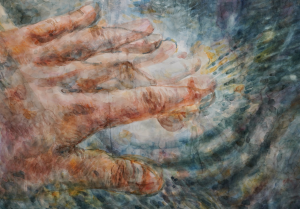
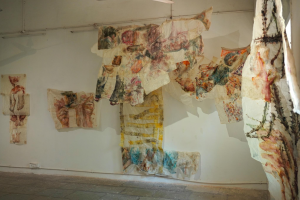
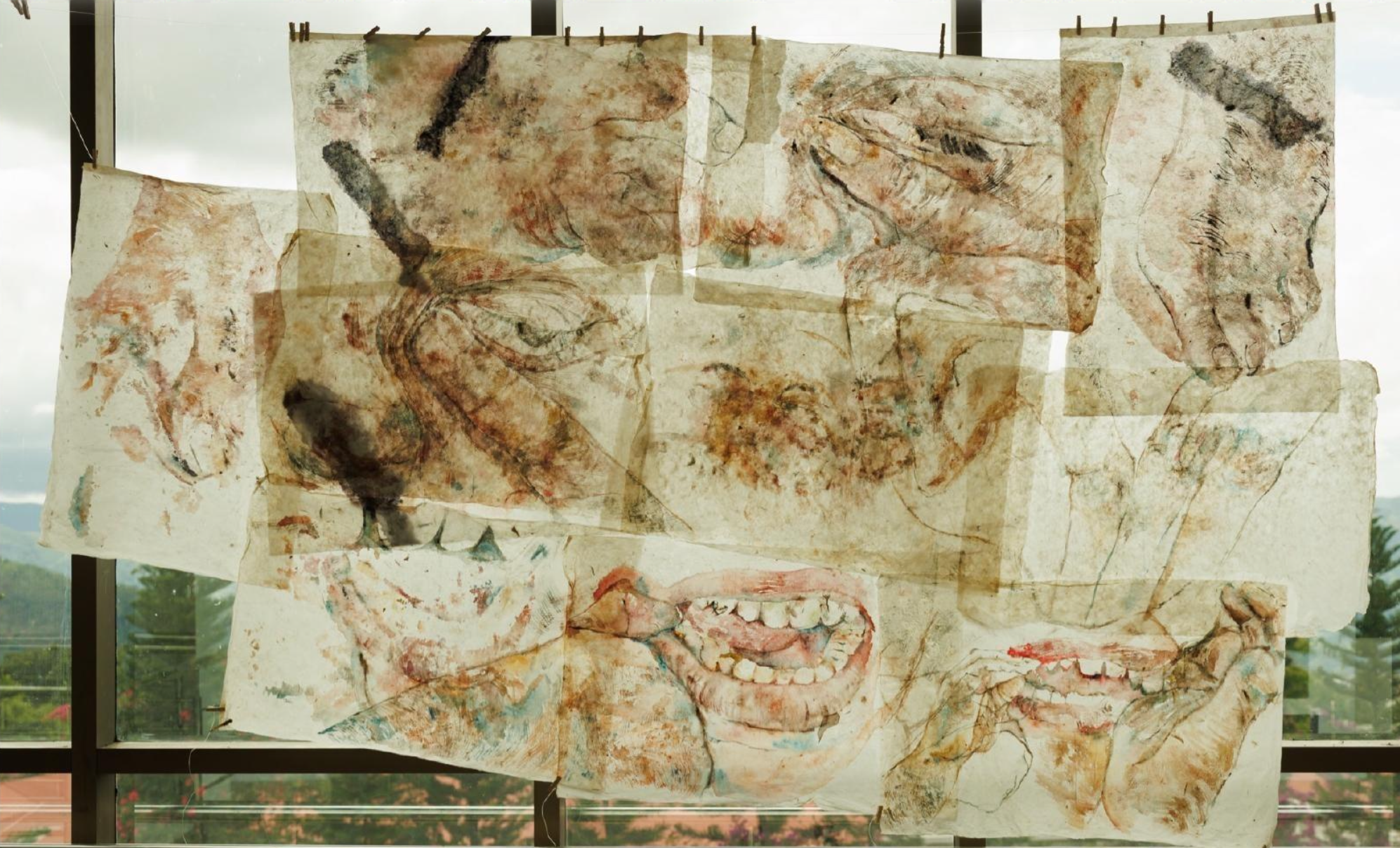
Suspended across delicate sheets of Lokta paper, Jyotismriti Bordoloi’s drawings unfold through stains, bleeds, smudges, and gestures that hover between intention and accident. Ink pools and disperses across the translucent surface, forming images that feel at once bodily and atmospheric. Within this delicacy and instability, there is also a violence in the sharp, bone-like linearity of spine-like limbs—forms that seem to thrust and cut across the paper, as if pressing against its fragility from within.
From a distance, the works appear almost weightless; up close, they reveal a dense accumulation of marks, residues, and traces. Layered drawings bleed through from one side of the paper to the other, producing multiple coexisting images. The surface operates almost as skin or membrane—something that both records and leaks, holding time, touch, and hesitation at once.
Installed in a small room, the works begin to generate a density within the space, with faint shadows and overlaps that linger across surfaces. Alongside the larger drawings, the installation incorporates intimate materials—thread, fabric lint, fingernails, and other remnants of touch and labour—forcing movement through the suspended sheets and encouraging interaction with these smaller fragments. These elements extend the logic of the drawings into space, shifting attention between scale and proximity, while also disrupting any clear boundary between image and object, drawing the viewer into a closer, more precarious proximity.
Learn more about Jyotismriti’s practice here, and should you be in interested in connecting with her, please contact her directly here.
This editorial is part of an ongoing series in collaboration with the Young Collectors’ Programme (YCP) — a fast-rising platform cultivating South Asia’s next-generation arts and culture ecosystem, incubating a new era of patronage by meaningfully supporting emerging artistic and curatorial practices while fostering a dynamic community of artists, collectors, curators, cultural leaders, art workers, galleries, institutions, corporate patrons, and creative partners. Whether you are beginning your collecting journey, looking to deepen your engagement with the arts, or seeking to connect with a community of like-minded cultural enthusiasts and professionals, YCP offers a unique platform to learn, engage, and participate in shaping the future of arts patronage in South Asia.