
Founded in 2014, SHED operates as a space for enquiry rather than a conventional studio, moving fluidly across furniture, objects, play systems and small architectural works. The studio’s work occupies a territory between the domestic and the speculative, recalibrating familiar forms—tables, game boards and storage pieces—through material experimentation, precise craftsmanship and a questioning of convention. At India Art Fair 2026, SHED presents a landscape of objects that reflects the growing breadth and maturity of the practice. Bringing together works developed through recent projects and self-initiated material explorations, the exhibition moves between play and function, and weight and delicacy. Developed entirely in-house through sustained collaboration and experimentation, the works on view are part of an evolving body of work shaped by attention, use, and time.
Studio SHED often speaks about objects carrying meaning over time. How do you define slow design in a way that is practical rather than romantic?
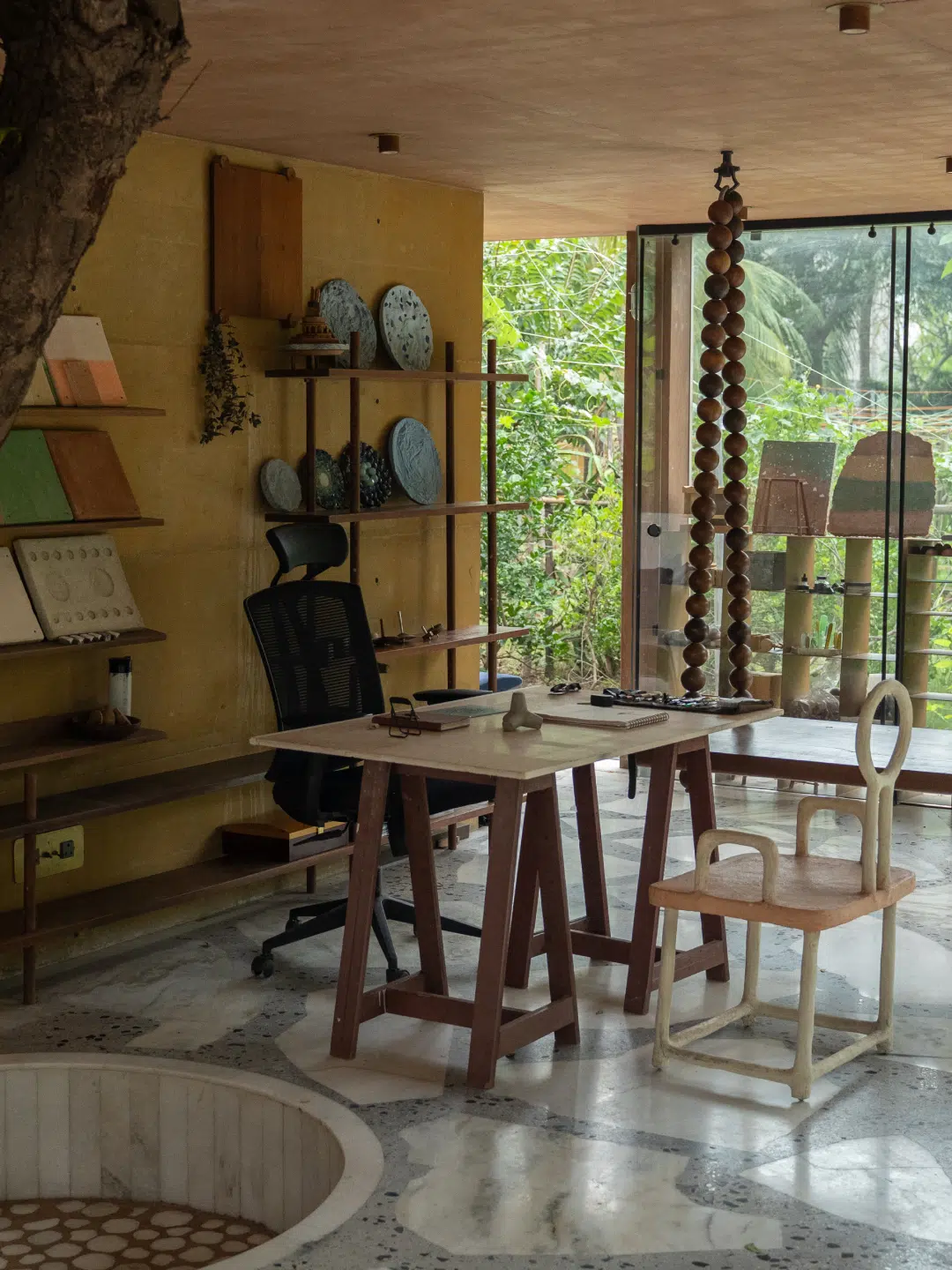
Slow, for us, does not describe pace. The studio is in constant motion—making, prototyping, testing, assembling and correcting. What we call “slow” refers to human-powered processes and the depth of attention they demand. The work is non-automated and relies on hand skill, material intuition and iterative making.
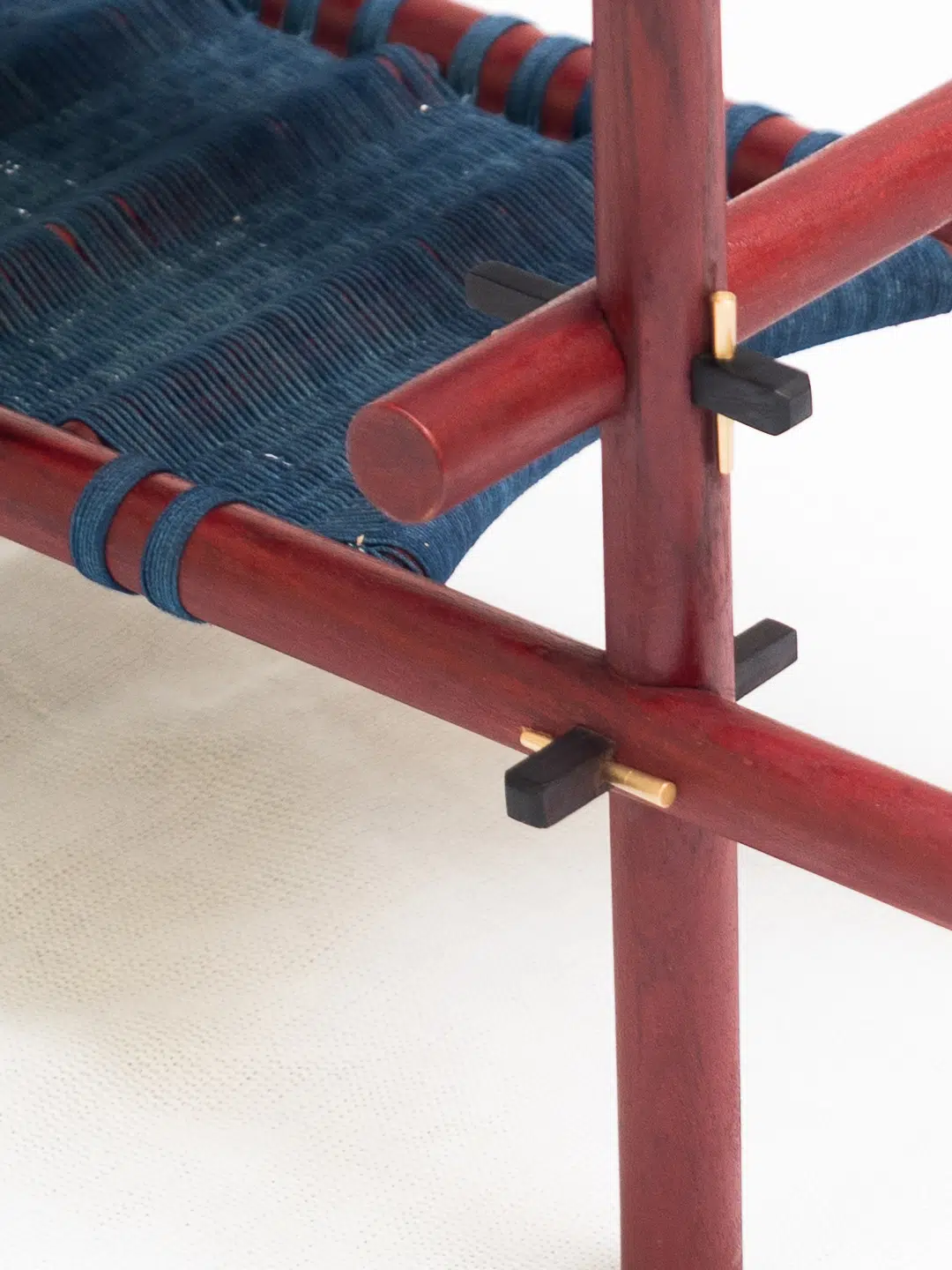
This slowness comes from allowing materials to reveal themselves through use rather than forcing predetermined outcomes. In stone inlay, pace is set by hand-cutting and polishing, and by veins, brittleness, colour and weight. In marquetry, wood grain determines how sheets can be sliced, bent or joined. In indigo weaving and paperclay, drying times, shrinkage, and surface tension become part of the design logic. These are not delays but data points intrinsic to the object.
Practically, slow design means working across full life cycles—assembly, repair, dismantling, patina, and material ageing. It also means returning to a small set of archetypes—tables, seats, games, storage, and surfaces—over many years, allowing each iteration to absorb previous learning. Slowness, for us, is attention, continuity and responsibility.
Many of your works are described as story-led. How do you decide what a project’s story is really about?
A story often begins with memory, observation or a particular human behaviour, but it is rarely fixed. Before drawing, I locate the emotional centre—play, rest, ritual, storage, gathering, inheritance, or time. Narratives also emerge through conversations with clients, by listening to how they live and what they value, often revealing what the brief does not.
In the studio, we write, sketch, and speak through these ideas, almost like scripting a choreography of use. The story is not an added layer but structural, shaping how a body approaches and inhabits an object. It continues to evolve through making, as materials resist and processes introduce their own logic, allowing form and material to crystallise around a clear core.
Play appears repeatedly in your work. What does it allow you to explore?
Play has been a liberating starting point in our practice. It allows us to move beyond the constraints of ergonomics and conventional performance. In play, the body is invited rather than instructed. A playing surface is completed through action, introducing unpredictability and shared authorship, and allowing us to design behaviours—competition, cooperation, pause, rhythm and chance. Objects become stages for social choreography rather than static artefacts.
More deeply, play is a way of entering memory. Playful encounters are absorbed intuitively and remembered emotionally, revealing how interaction, joy, and surprise allow objects to stay with people beyond the moment of use.
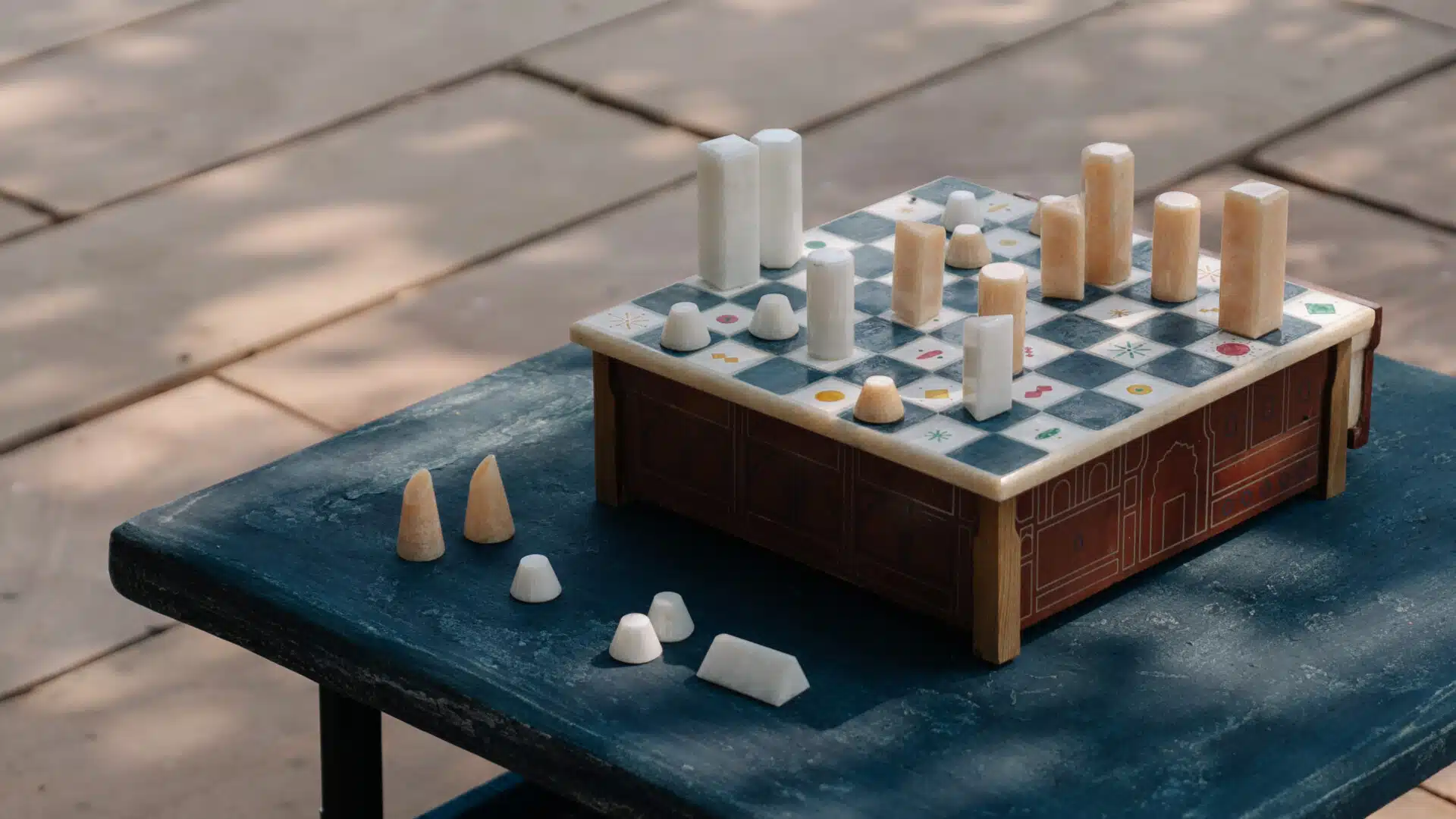
The Kirwani Carrom Board transforms a familiar game into a richly layered object. How did it come together?
The Kirwani Carrom Board began with observing how deeply Carrom is embedded in Indian domestic life—played across generations, on rooftops and in courtyards, during power cuts and festivals. We wanted to eliminate plyboards and composite materials; wood’s elasticity would have required a laminated surface that felt misaligned with the material honesty we value.
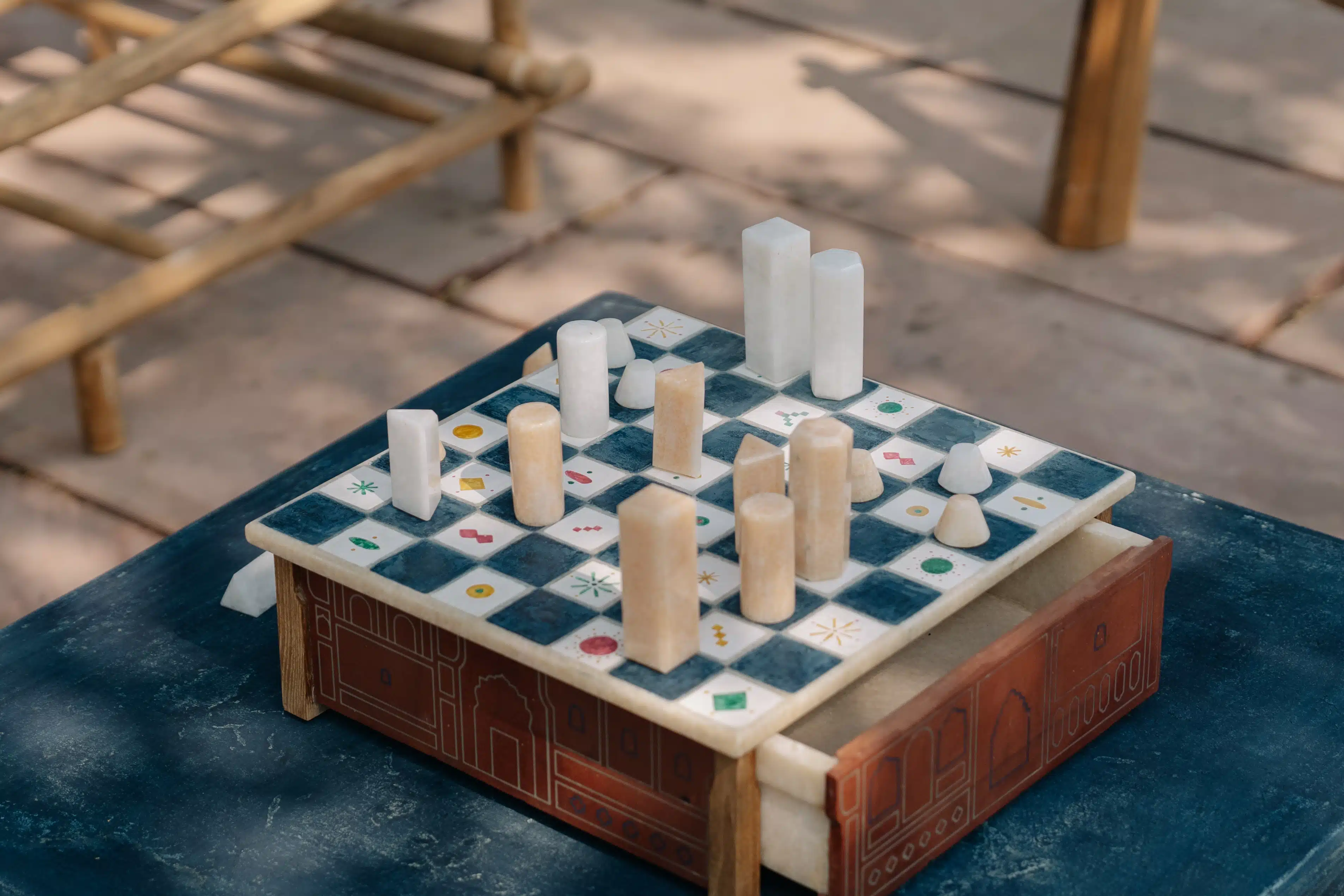
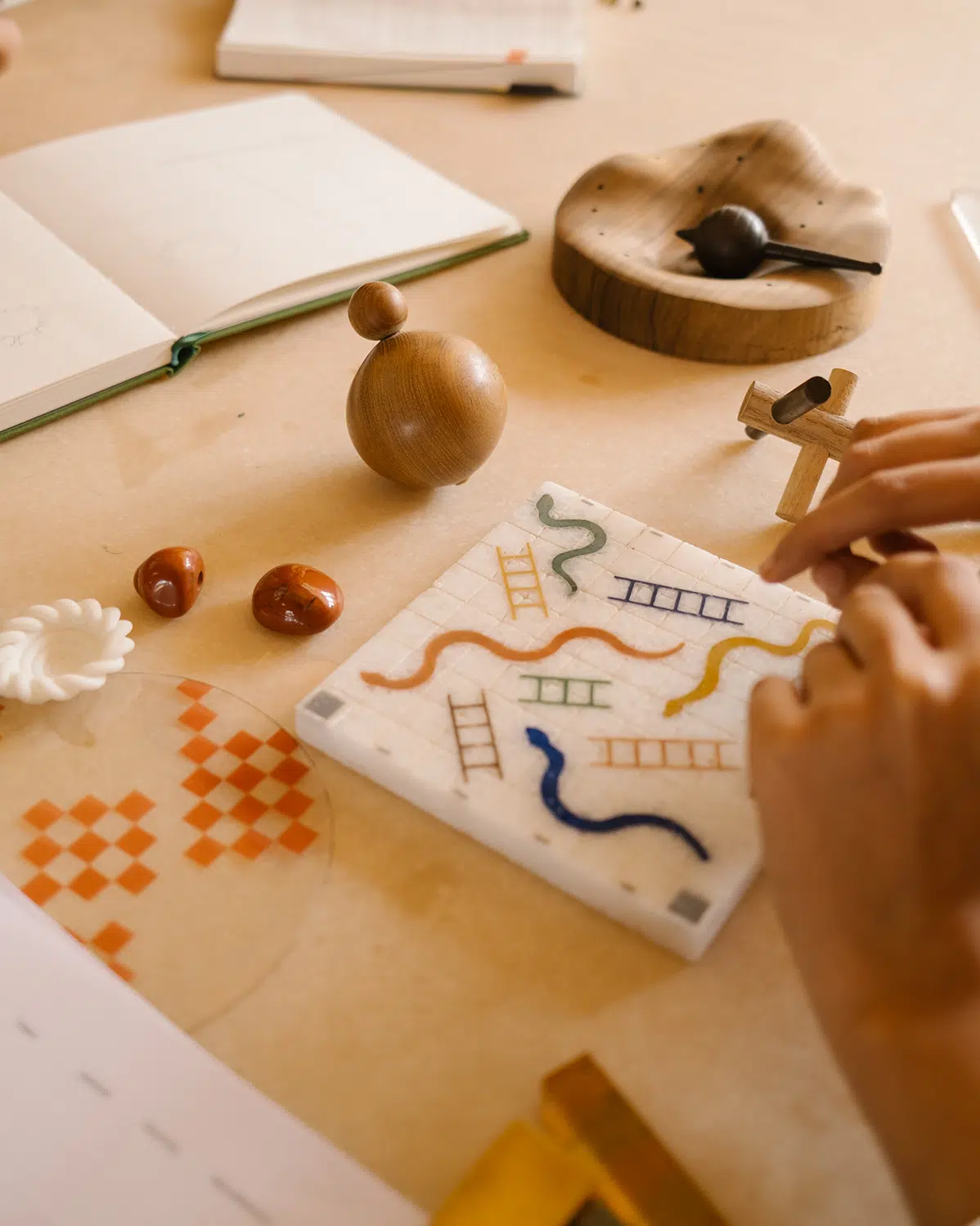
Marble emerged as a frictionless, natural surface suited to gameplay, though it demanded high levels of craftsmanship to achieve a perfectly level field despite pattern-making. The board became a site for marquetry and inlay, drawing from miniature painting and traditional ornamentation. Carpenters, precision inlay artisans, and polishers worked together to achieve a zero-zero level finish, ensuring ornament never compromised the physics of the game.
Across your practice, you reimagine objects that already exist in people’s lives. What must remain intact, and what can be disrupted?
For an object to remain recognisable, its primary ritual of use must stay intact—the body’s approach, and sequence of actions and gestures must remain immediately legible. This behavioural script, more than silhouette, defines identity.
What we disrupt are the assumptions around that ritual: scale, material hierarchy, surface language and the boundary between the ordinary and the precious. A game board can be treated like an architectural floor, a storage box can carry the presence of a small building, furniture can be approached as landscape and a miniature object can hold the complexity of a room. Through shifts in material, proportion and context, familiar objects remain functionally clear but are perceptually recharged.

Studio SHED is deeply collaborative. How does this shape the work?
Our studio is a constellation of architects, designers, and craftspeople—carpenters, turners, sculptors, and self-trained specialists such as glass polishers and indigo dyers. We identify training as a process that fosters building confidence to experiment, with shared accountability and no penalty for failure. When artisans understand the narrative, their insights often transform objects in unexpected ways.
Your outdoor furniture engages closely with weather and time. How do you design for ageing?
We see ageing as a collaborator rather than a problem. In the outdoor furniture for Taral, concrete was chosen for its contradictions—often perceived as harsh, yet capable of longevity and circularity. Designed to stand openly in rain, sun and soil, the material records time rather than resisting it.
The narrative emerged from concrete’s transition from liquid to solid—intervening while it is fluid, then allowing it to harden and age on its own terms. Forms are kept calm and legible so that as surfaces stain or develop patina, the underlying gesture remains clear. The story unfolds over seasons and use.
Based in Surat, how have local systems shaped SHED’s way of working? How do such regional practices contribute to a broader, less metro-centric understanding of contemporary Indian design?
Surat is often understood through its scale and industry, and rightly so—it is a large, ambitious city with a vast industrial landscape and a strong drive for growth. Having grown up here, I have always felt this energy of aspiration, of wanting to build and expand. Our practice did not emerge from tapping into pre-existing artisan clusters, but from creating new ways of working—reviving skills, inventing protocols, and building teams and systems in real time. What made Surat fertile was its lack of rigid, historically fixed design structures. It felt like a blank canvas, free of entrenched hierarchies or assumptions about how a studio should function.
Over time, the studio became a space to understand the human dimension of making–how to build confidence, sustain curiosity, and keep innovation alive where it may not be structurally encouraged. This belief that, with the right conditions, people can learn anything, has been central to SHED’s growth, and Surat’s industrious spirit is what allowed it to take form.
I believe deeply in the need for parallel systems of thinking and making alongside the mainstream. Regional practices reveal how cultures evolve through distinct combinations of environment, social structure, and economy, creating resilience and innovation over time. In a country like India, with its deep and layered histories, any single, centralised design language would be reductive; it is this plurality that sustains cultural vitality and nurtures true innovation.
When visitors encounter SHED at India Art Fair 2026, what do you hope they take away?
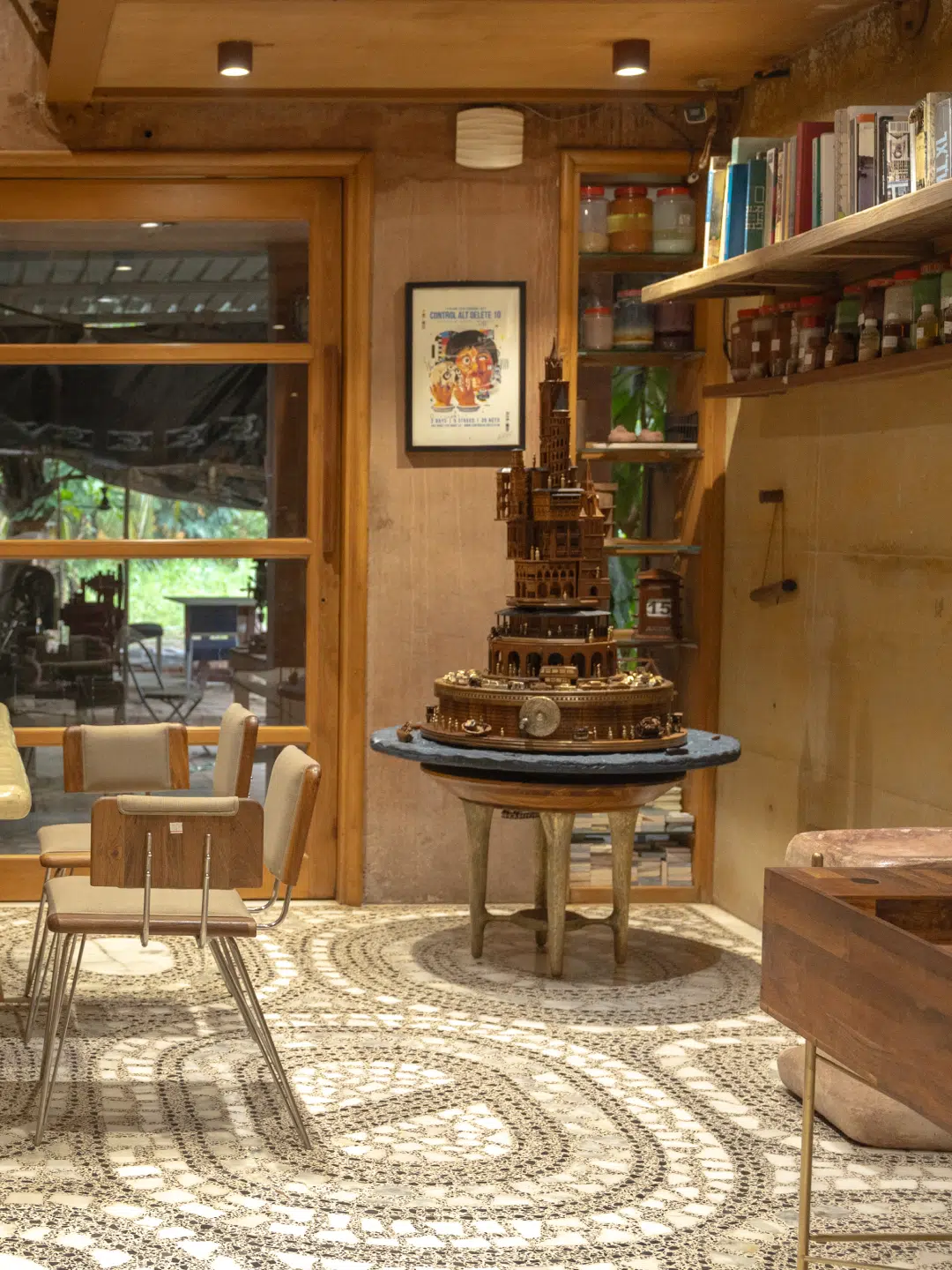
At India Art Fair the visitors will sense our care and human attention. Our presentation reflects the abundance of our material culture and the long histories of experimentation that inform how we work with wood, stone, metal, clay, glass, and fibre.
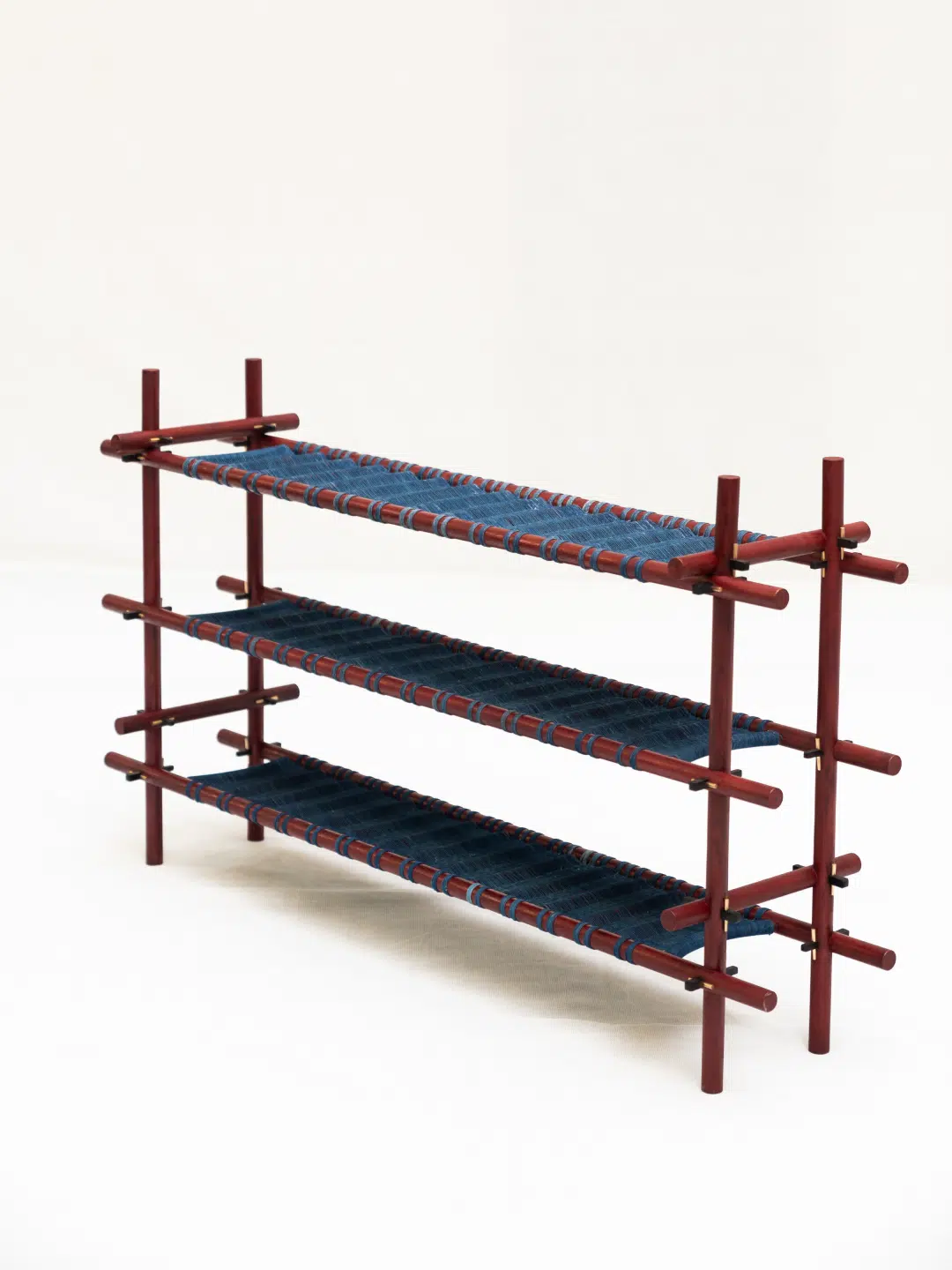
The exhibition brings together furniture, play objects, and architectural works developed through recent projects and self-initiated material explorations. Pieces move between domesticity and the architecture, play and use, and weight and delicacy—from the Mattress Sofa, drawn from everyday domestic habits, to Varso marble inlay tables, concrete and stainless-steel seating, and layered glass structures. Across the space, materials are pushed through repeated testing–wood bent, stacked, woven and torched; glass treated as structure; stone assembled through inlay or tension; paperclay expanded into more resolved forms. Movement and play are integral, with objects that rotate, slide or invite handling, to treat interaction as part of the object’s life rather than an addition. Developed entirely in-house at SHED, the works are not conclusions but moments within an evolving practice shaped by use, material behaviour and time.
Priyanka Shah is the founder of Studio SHED, a multidisciplinary practice based in Surat, Gujarat. Trained as an architect at Parsons School of Design, New York, she works across furniture, objects and material-led explorations that rethink everyday use through making.